
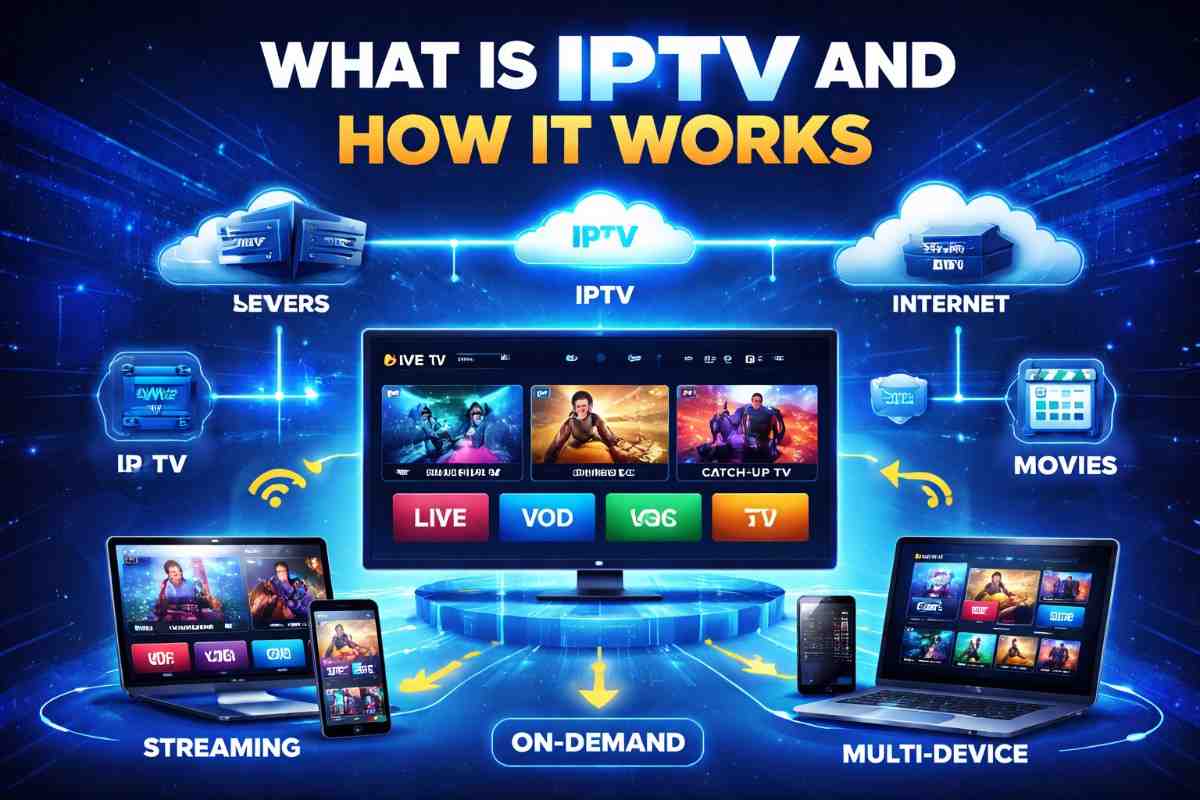
The way people consume television has dramatically evolved over the past decade. Traditional cable and satellite TV are no longer the only options for accessing live channels, movies, and on-demand content. One of the most popular alternatives today is IPTV (Internet Protocol Television). With faster internet speeds and smarter devices, IPTV has become a preferred choice for millions of users worldwide.
In this comprehensive guide, you’ll learn what is IPTV and how it works, its features, benefits, types, and everything you need to know before using it.

What is IPTV?
what is IPTV and how it works is a digital television broadcasting system that delivers TV content through the internet instead of traditional methods like cable or satellite.
Unlike conventional TV services that use signals via antennas, satellite dishes, or fiber cables, IPTV uses your internet connection to stream media content directly to your device.
Simple Definition:
IPTV is a system where television services are delivered using the internet protocol (IP) over a network such as broadband or fiber.
How IPTV Works
To understand how IPTV works, let’s break it down into simple steps:
1. Content Acquisition
TV channels, movies, and shows are collected from various sources such as:
- Live broadcasts
- Video-on-demand (VOD) libraries
- Recorded content
2. Encoding & Compression
The content is converted into a digital format and compressed to ensure smooth streaming over the internet.
3. Storage & Servers
Content is stored on powerful servers. These servers are responsible for delivering the content when users request it.
4. Content Delivery via IP Network
When you select a channel or video:
- Your device sends a request to the IPTV server
- The server streams the content through the internet using IP packets
5. Playback on User Device
You can watch IPTV on:
- Smart TVs
- Smartphones
- Tablets
- Computers
- Streaming devices (Firestick, Android TV)
Types of IPTV Services
IPTV services are generally divided into three main categories:
1. Live Television
This is similar to traditional TV broadcasting where you watch programs in real-time.
Examples:
- News channels
- Sports events
- Live shows
2. Video on Demand (VOD)
VOD allows users to watch movies and TV shows whenever they want.
Features:
- Pause, rewind, fast forward
- Huge content library
- No fixed schedule
3. Time-Shifted TV
This feature lets users watch previously aired content.
Examples:
- Catch-up TV
- Replay shows from earlier in the day
Key Features of IPTV
IPTV offers a wide range of features that make it superior to traditional TV:
High-Quality Streaming
- HD, Full HD, and even 4K content
On-Demand Access
- Watch what you want, when you want
Multi-Device Support
- Access content on multiple devices
Interactive Experience
- Pause, rewind, record live TV
Electronic Program Guide (EPG)
- Easy navigation of channels and schedules
Global Content Access
- Channels from different countries
IPTV vs Traditional TV
| Feature | IPTV | Cable/Satellite TV |
|---|---|---|
| Delivery Method | Internet | Cable/Satellite |
| Flexibility | High | Limited |
| Device Support | Multiple | Mostly TV only |
| Cost | Affordable | Expensive |
| Content Control | On-demand | Scheduled |
Advantages of IPTV
1. Cost-Effective
IPTV subscriptions are generally cheaper than cable TV packages.
2. Flexibility
You can watch content anytime, anywhere.
3. Wide Content Selection
Access thousands of channels and VOD content.
4. Customization
Users can choose plans based on preferences.
5. No Installation Hassle
No need for satellite dishes or complex wiring.
Disadvantages of IPTV
1. Internet Dependency
A stable internet connection is required.
2. Buffering Issues
Slow internet can cause interruptions.
3. Legal Concerns
Some IPTV services may not have proper licensing.
4. Security Risks
Unverified providers can pose risks.
Requirements for IPTV
To use IPTV, you need the following:
1. High-Speed Internet
- Minimum: 10 Mbps for HD
- Recommended: 25 Mbps for 4K
2. Compatible Device
- Smart TV
- Android or iOS device
- PC or laptop
- Streaming device
3. IPTV App or Player
Popular IPTV players include:
- IPTV Smarters
- TiviMate
- VLC Media Player
4. Subscription or Playlist
- M3U playlist
- Xtream Codes API
IPTV Setup Guide
Setting up IPTV is simple:
Step 1: Choose an IPTV Provider
Select a reliable and legal service provider.
Step 2: Install IPTV App
Download an IPTV player on your device.
Step 3: Enter Login Details
Add:
- M3U URL or file
- Username/password (if required)
Step 4: Start Streaming
Browse channels and enjoy content.
IPTV Streaming Formats
IPTV content is delivered using different formats:
1. M3U Playlist
A file containing streaming links.
2. MPEG-TS
Used for live streaming.
3. HLS (HTTP Live Streaming)
Adaptive streaming format for better performance.
IPTV Architecture
IPTV systems rely on a structured architecture:
1. Content Provider
Supplies TV programs and media.
2. IPTV Service Provider
Manages servers and distribution.
3. CDN (Content Delivery Network)
Ensures fast and smooth delivery.
4. End User Device
Where content is viewed.
Is IPTV Legal?
IPTV itself is completely legal. However, legality depends on the service provider.
Legal IPTV Services:
- Licensed and authorized content distribution
Illegal IPTV Services:
- Unauthorized streaming of copyrighted content
Tip: Always choose a trusted provider to avoid legal issues.
IPTV Use Cases
IPTV is widely used in various industries:
1. Home Entertainment
Replacing cable TV for families.
2. Hospitality Industry
Hotels provide IPTV for guests.
3. Education
Streaming lectures and training videos.
4. Corporate Sector
Internal broadcasting and communication.
IPTV Trends in 2026
The IPTV industry continues to grow rapidly. Here are some key trends:
AI-Powered Recommendations
Smart content suggestions based on viewing habits.
5G Integration
Faster and smoother streaming.
Cloud-Based IPTV
Reduced hardware dependency.
4K & 8K Streaming
Higher quality viewing experience.
Interactive Features
Live polls, chat, and personalized UI.
IPTV vs OTT
Many people confuse IPTV with OTT (Over-The-Top) services.
| Feature | IPTV | OTT |
|---|---|---|
| Delivery | Private network | Public internet |
| Examples | IPTV providers | Netflix, YouTube |
| Control | Managed | Open |
Best Devices for IPTV
Here are some popular devices for IPTV streaming:
- Amazon Firestick
- Android TV Box
- Smart TVs (Samsung, LG)
- Smartphones & Tablets
- Windows & Mac PCs
Tips for Choosing the Best IPTV Service
Check Channel List
Ensure it includes your favorite channels.
Look for Trial Options
Test the service before buying.
Verify Streaming Quality
HD/4K availability is important.
Customer Support
Reliable support is essential.
Pricing
Compare plans and value.
Common IPTV Issues & Solutions
Buffering
- Upgrade internet speed
- Use wired connection
Channels Not Loading
- Refresh playlist
- Check server status
App Crashes
- Update app
- Clear cache
Future of IPTV
The future of IPTV looks promising with continuous advancements in technology. As internet infrastructure improves globally, IPTV will likely replace traditional TV entirely.
Innovations like:
- Virtual reality streaming
- AI integration
- Personalized content delivery
will make IPTV even more powerful and user-friendly.
Conclusion
IPTV is transforming the way we watch television by offering flexibility, affordability, and a wide range of content. Unlike traditional cable or satellite TV, IPTV leverages the power of the internet to deliver high-quality, on-demand entertainment directly to your devices.
Understanding what IPTV is and how it works helps you make informed decisions when choosing a streaming service. Whether you’re looking for live TV, movies, or global channels, IPTV provides a modern and convenient solution for all your entertainment needs.
FAQs
What does IPTV stand for?
IPTV stands for Internet Protocol Television.
Do I need a smart TV for IPTV?
No, you can use smartphones, PCs, or streaming devices.
Is IPTV better than cable TV?
Yes, IPTV offers more flexibility and often lower costs.
Can IPTV work on slow internet?
It may work, but buffering issues can occur.
Is IPTV safe to use?
Yes, if you use a legal and trusted provider.