
Learn what IPTV services are, how they work, their benefits, types, supported devices, and best practices in this comprehensive guide to Internet Protocol Television.
IPTV Services Explained: A Complete Guide to Internet Protocol Television
Table of Contents
- Introduction
- What Are IPTV Services?
- How IPTV Services Work
- Types of IPTV Services
- Key Components of IPTV
- Benefits of IPTV Services
- IPTV vs Cable vs Satellite
- Common Use Cases
- Conclusion
Introduction
Television has evolved dramatically over the last two decades. While traditional cable and satellite television continue to serve millions of viewers, internet-based content delivery has transformed how people watch video. One of the technologies driving this change is IPTV (Internet Protocol Television).
Unlike traditional broadcasting methods, IPTV delivers television content over Internet Protocol (IP) networks. This allows viewers to access live television, video on demand (VOD), and catch-up programming through internet-connected devices.
Today, IPTV technology is used in many legitimate environments, including hotels, hospitals, universities, airlines, corporate campuses, and licensed streaming platforms. Businesses value IPTV because it offers centralized content management, flexible deployment, and scalable infrastructure.
This guide explains IPTV services from a technical and practical perspective, helping readers understand how the technology works, where it is used, and what to consider when evaluating IPTV solutions.
What Are IPTV Services?
IPTV services are systems that distribute television and video content using Internet Protocol networks instead of traditional cable, satellite, or terrestrial broadcasting.
Rather than sending every television channel simultaneously, Best IPTV streams requested content through a managed network connection. This enables greater flexibility, interactive features, and improved content management.
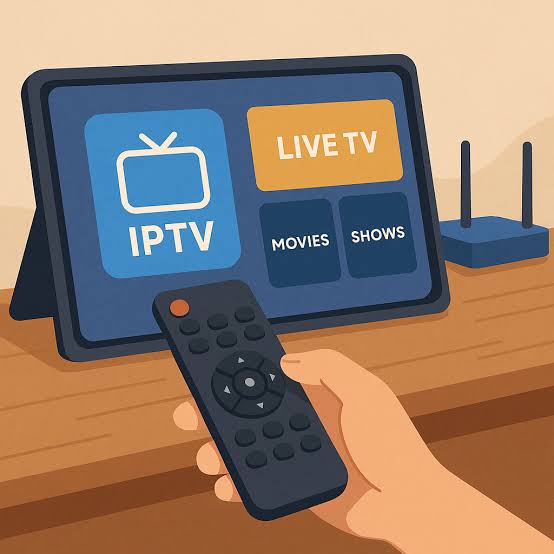
A modern IPTV deployment may support:
- Live television channels
- Video on Demand (VOD)
- Time-shifted television
- Catch-up TV
- Digital signage
- Interactive applications
- Educational content
- Corporate communications
Because IPTV is network-based, administrators can manage users, content libraries, permissions, and devices from centralized platforms.
How IPTV Services Work
Understanding IPTV begins with understanding how video travels across an IP network.
A simplified IPTV workflow includes:
| Step | Description |
|---|---|
| Content Acquisition | Video is received from broadcasters or internal sources. |
| Encoding | Video is compressed into efficient digital formats. |
| Streaming Server | Encoded content is stored or prepared for live delivery. |
| Content Management | Users, channels, permissions, and metadata are managed. |
| Network Delivery | Video is transmitted through an IP network. |
| Playback Device | Users watch content on compatible devices. |
Unlike traditional broadcasting, IPTV delivers requested content directly to the viewer, making efficient use of available bandwidth.
Types of IPTV Services
Different organizations deploy IPTV for different purposes. The most common categories include:

1. Live Television
Live IPTV streams television programming in real time over an IP network. Examples include news broadcasts, sports, educational channels, and company-wide announcements.
Common Uses
- Hotels
- Universities
- Corporate offices
- Hospitals
- Residential managed networks
2. Video on Demand (VOD)
Video on Demand allows viewers to select content whenever they choose rather than following a fixed broadcast schedule.
Examples include:
- Training videos
- Educational lectures
- Movie libraries
- Product demonstrations
- Internal corporate content
VOD provides flexibility because viewers control playback.
3. Time-Shifted Television
Time-shifted television allows viewers to watch previously aired programs after their original broadcast.
This is useful for:
- Busy professionals
- Students
- Corporate training
- Educational institutions
4. Enterprise IPTV
Many organizations deploy IPTV internally for communication.
Typical enterprise applications include:
- CEO broadcasts
- Training sessions
- Internal announcements
- Live events
- Emergency notifications
Enterprise IPTV reduces travel costs while improving communication efficiency.
5. Hospitality IPTV
Hotels increasingly replace traditional television infrastructure with IPTV systems.
Benefits include:
- Personalized welcome screens
- Local information
- Interactive menus
- Room service integration
- Guest messaging
- Multilingual support
Hospitality IPTV enhances the guest experience while simplifying content management.
Key Components of IPTV
A reliable IPTV solution includes several interconnected components.
Content Source
The system receives content from licensed broadcasters, cameras, production studios, or internal media servers.
Encoder
Encoders convert raw video into compressed digital formats suitable for network delivery.
Common codecs include:
- H.264
- H.265 (HEVC)
- AV1 (in some deployments)
Efficient compression reduces bandwidth consumption without significantly affecting quality.
Middleware
Middleware manages authentication, user interfaces, permissions, channel lists, and service configuration.
It acts as the bridge between viewers and the IPTV platform.
Streaming Server
Streaming servers distribute video efficiently to multiple viewers while maintaining performance and reliability.
Network Infrastructure
A stable IP network is essential for smooth playback.
Typical components include:
- Routers
- Switches
- Firewalls
- Content Delivery Networks (CDNs)
- Fiber infrastructure
- Wi-Fi access points (where appropriate)
Benefits of IPTV Services
Organizations choose IPTV for several reasons.
Flexible Content Delivery
Unlike traditional broadcasting, IPTV allows content to reach viewers on multiple devices connected to the network.
Centralized Management
Administrators can update channels, content libraries, and permissions from a single management platform.
Interactive Features
IPTV platforms often support:
- Search functionality
- Electronic Program Guides (EPGs)
- Interactive menus
- User profiles
- Personalized recommendations
Scalability
Organizations can expand IPTV deployments as their needs grow without completely replacing existing infrastructure.
High Video Quality
Modern IPTV solutions support:
- HD
- Full HD
- 4K (where supported by the network and devices)
Quality depends on encoding, network capacity, and playback hardware.
Cost Efficiency
For organizations, IPTV can reduce maintenance costs associated with legacy broadcasting equipment and simplify content distribution across multiple locations.
IPTV vs Cable vs Satellite
| Feature | IPTV | Cable | Satellite |
|---|---|---|---|
| Delivery Method | IP Network | Coaxial Cable | Satellite Signal |
| Interactive Features | Excellent | Moderate | Limited |
| Video on Demand | Yes | Often Available | Limited |
| Centralized Management | Yes | Limited | Limited |
| Multi-Device Support | Excellent | Moderate | Moderate |
| Enterprise Applications | Extensive | Limited | Limited |
Each technology has strengths, and the right choice depends on network availability, deployment goals, and user requirements.
Common Use Cases
Education
Schools and universities use IPTV to deliver lectures, campus announcements, recorded classes, and live events.
Healthcare
Hospitals provide patient entertainment, educational programming, health information, and internal communications using IPTV systems.
Hospitality
Hotels use IPTV for in-room entertainment, guest services, local information, and personalized experiences.
Corporate Communications
Large organizations broadcast meetings, training sessions, executive announcements, and live events across multiple offices.
Public Venues
Airports, stadiums, shopping centers, and transportation hubs use IPTV for information displays, advertising, and live event coverage.
Essential Features of IPTV Services
A modern IPTV platform offers far more than simply streaming television channels. Organizations now expect flexible management, high-quality video delivery, and seamless compatibility across multiple devices.
Some of the most valuable features include:
Electronic Program Guide (EPG)
An Electronic Program Guide helps users browse available channels and scheduled programs through an easy-to-use interface.
Benefits include:
- Easy navigation
- Program schedules
- Search functionality
- Category filtering
- Better viewing experience
Video on Demand (VOD)
VOD enables viewers to access available content whenever they choose rather than waiting for scheduled broadcasts.
Typical VOD content includes:
- Educational videos
- Company training
- Movies
- Documentaries
- Recorded conferences
- Product demonstrations
User Management
Enterprise IPTV platforms often include centralized administration tools for:
- User accounts
- Department permissions
- Device registration
- Access control
- Viewing policies
This simplifies deployment across large organizations.
Multi-Language Support
International organizations benefit from multilingual interfaces and audio options that improve accessibility for global audiences.
Analytics and Reporting
Many IPTV platforms provide usage reports that help administrators understand:
- Popular content
- Viewer engagement
- Viewing duration
- Peak traffic times
- Device usage
These insights support better content planning.
Device Compatibility
One of IPTV’s strengths is its ability to work across a wide range of internet-connected devices.
Smart TVs
Many Smart TVs include applications or browser support for IPTV systems used in hospitality, education, or enterprise environments.
Advantages:
- Large displays
- Remote control support
- High-definition playback
- Easy deployment in shared spaces
Smartphones
Mobile access allows users to watch authorized content while away from a desktop environment.
Benefits include:
- Portability
- Notifications
- On-the-go access
- Flexible viewing
Tablets
Tablets combine portability with larger displays, making them ideal for education, healthcare, and business presentations.
Desktop and Laptop Computers
Web-based IPTV solutions enable users to access content through supported browsers without requiring specialized hardware.
Streaming Devices
Organizations may also deploy compatible streaming hardware to simplify installations in conference rooms, hotel rooms, classrooms, or public spaces.
Network Requirements
Reliable IPTV performance depends heavily on network quality.
Important considerations include:
Stable Internet Connection
Consistent bandwidth helps reduce buffering and playback interruptions.
Low Latency
Lower latency improves live streaming experiences and reduces delays.
Quality of Service (QoS)
Network administrators often prioritize video traffic using QoS settings to ensure smooth playback during periods of heavy usage.
Wired Connections
Where possible, Ethernet connections generally provide more consistent performance than wireless networks for fixed installations.
Network Security
Organizations should protect IPTV infrastructure through:
- Firewalls
- Secure authentication
- Network segmentation
- Access controls
- Regular software updates
IPTV Deployment Models
Different organizations choose deployment models based on operational requirements.
| Deployment Model | Best For | Advantages |
|---|---|---|
| On-Premises | Large enterprises | Full control, internal management |
| Cloud-Based | Growing organizations | Scalability, reduced infrastructure |
| Hybrid | Mixed environments | Flexibility and redundancy |
On-Premises IPTV
Content servers remain inside the organization’s network.
Ideal for:
- Government agencies
- Universities
- Hospitals
- Large corporations
Cloud IPTV
Cloud deployment reduces hardware requirements and simplifies scaling across multiple locations.
Benefits include:
- Lower maintenance
- Remote management
- Faster updates
- Flexible expansion
Hybrid IPTV
Hybrid deployments combine local infrastructure with cloud resources, balancing performance, reliability, and scalability.
IPTV in Different Industries
Education
Educational institutions use IPTV to distribute:
- Recorded lectures
- Live classrooms
- Campus announcements
- Digital libraries
- Research presentations
Students can access learning materials from multiple locations, improving flexibility.
Healthcare
Hospitals benefit from IPTV by providing:
- Patient entertainment
- Educational content
- Internal staff communications
- Emergency alerts
- Digital signage
These services enhance both patient experience and operational efficiency.
Hospitality
Hotels increasingly rely on IPTV systems to provide:
- Personalized welcome screens
- Local information
- Guest messaging
- Interactive room services
- Entertainment options
Centralized management simplifies updates across hundreds of rooms.
Corporate Organizations
Businesses use IPTV for:
- Executive presentations
- Employee onboarding
- Compliance training
- Company announcements
- Live events
- Internal communications
This helps ensure consistent messaging across multiple offices.
Transportation
Airports, railway stations, and transit hubs use IPTV for:
- Passenger information
- Live news
- Flight updates
- Advertising
- Public announcements
Choosing an IPTV Solution
Selecting an IPTV solution requires careful planning.
Consider the following factors:
Scalability
Can the platform support future growth?
Look for systems that allow additional users, devices, or locations without major infrastructure changes.
Reliability
A dependable IPTV solution should provide:
- Stable performance
- High uptime
- Redundancy options
- Regular updates
Ease of Management
Administrative dashboards should simplify:
Security
Evaluate whether the platform supports:
- Encryption
- Authentication
- User roles
- Audit logs
- Secure updates
Technical Support
Reliable documentation and responsive vendor support contribute to successful long-term deployments.
Best Practices
Organizations implementing IPTV should follow several best practices.
Plan Network Capacity
Estimate expected viewers and bandwidth requirements before deployment.
Keep Software Updated
Regular updates improve security, compatibility, and stability.
Organize Content
Use clear categories and metadata to help users locate content quickly.
Train Administrators
Ensure administrators understand system configuration, security, and maintenance procedures.
Monitor Performance
Regularly review analytics to identify bottlenecks and improve the viewing experience.
Common Challenges
Like any technology, IPTV deployments may encounter challenges.
Buffering
Often caused by insufficient bandwidth or network congestion.
Compatibility Issues
Older hardware or outdated software may not support modern streaming technologies.
Security Risks
Weak authentication or poor network configuration can expose systems to unauthorized access.
Scaling Difficulties
Rapid organizational growth may require additional infrastructure planning.
Proactive maintenance and proper design help minimize these issues.
Future of IPTV
The IPTV landscape continues to evolve alongside advances in networking and media technologies.
Emerging trends include:
- Greater adoption of cloud-based infrastructure
- Expansion of 4K and higher-resolution streaming
- AI-assisted content recommendations
- Improved accessibility features
- Enhanced analytics for administrators
- Integration with smart building technologies
- More efficient video compression standards
- Increased support for hybrid work and remote learning environments
As internet connectivity improves worldwide, IPTV is expected to remain an important platform for delivering video content across education, healthcare, hospitality, enterprise communication, and public information systems.
Frequently Asked Questions (FAQ)
1. What does IPTV stand for?
IPTV stands for Internet Protocol Television. It is a method of delivering television and video content over IP networks rather than traditional terrestrial, satellite, or cable broadcast systems.
2. How is IPTV different from cable TV?
Cable TV uses coaxial cable infrastructure to broadcast channels, while IPTV transmits video using Internet Protocol networks, enabling more interactive and flexible viewing experiences.
3. Is IPTV only used for home entertainment?
No. IPTV is widely used in hotels, hospitals, universities, airports, corporate offices, and government facilities for communication, education, information displays, and entertainment.
4. What types of content can IPTV deliver?
An IPTV system can deliver:
- Live television
- Video on Demand (VOD)
- Recorded programs
- Educational videos
- Corporate communications
- Digital signage
- Interactive information services
5. What internet speed is recommended for IPTV?
Bandwidth requirements vary depending on video quality and the number of simultaneous viewers. Higher resolutions generally require greater network capacity and stable connections.
6. Can IPTV support 4K streaming?
Yes. Many modern IPTV platforms support 4K content when compatible hardware, efficient video encoding, and sufficient network bandwidth are available.
7. Which devices support IPTV?
Common compatible devices include:
- Smart TVs
- Desktop computers
- Laptops
- Smartphones
- Tablets
- Streaming devices
- Enterprise display systems
8. What is Video on Demand (VOD)?
VOD allows users to watch available content whenever they choose instead of following a scheduled broadcast.
9. What is an Electronic Program Guide (EPG)?
An EPG is an on-screen guide that displays available channels, schedules, and program information to help viewers navigate content.
10. Can IPTV be used in businesses?
Yes. Organizations use IPTV for employee training, executive communications, live events, digital signage, and internal announcements.
11. Is IPTV suitable for educational institutions?
Yes. Universities and schools commonly use IPTV to stream lectures, campus events, recorded classes, and educational resources.
12. Why is network quality important?
Reliable network infrastructure helps ensure smooth playback, reduced buffering, and consistent video quality.
13. Is IPTV scalable?
Most enterprise IPTV solutions are designed to grow with organizational needs, allowing administrators to add users, devices, and locations over time.
14. What security features are important?
Organizations should look for secure authentication, encrypted connections, role-based access, regular software updates, and network segmentation.
15. What industries benefit most from IPTV?
Industries that commonly deploy IPTV include:
- Hospitality
- Healthcare
- Education
- Corporate enterprises
- Transportation
- Government
- Retail
IPTV Glossary
| Term | Meaning |
|---|---|
| IPTV | Internet Protocol Television |
| VOD | Video on Demand |
| EPG | Electronic Program Guide |
| Middleware | Software connecting users with IPTV services |
| Encoder | Converts raw video into digital streaming formats |
| Streaming Server | Delivers video content to viewers |
| QoS | Quality of Service, used to prioritize network traffic |
| CDN | Content Delivery Network |
| HEVC | High Efficiency Video Coding (H.265) |
| LAN | Local Area Network |
Common Myths About IPTV
Myth 1: IPTV is only for watching TV.
Reality: IPTV is used for training, education, digital signage, hospitality, healthcare, and enterprise communications.
Myth 2: IPTV only works on Smart TVs.
Reality: IPTV can be accessed on many internet-connected devices, including computers, tablets, smartphones, and compatible streaming hardware.
Myth 3: IPTV is difficult to manage.
Reality: Modern IPTV platforms often provide centralized dashboards that simplify user management, content distribution, and reporting.
Myth 4: IPTV always requires expensive hardware.
Reality: Deployment costs depend on the size and requirements of the project. Cloud-based and hybrid solutions can reduce infrastructure needs for many organizations.
Conclusion
Internet Protocol Television has become an important technology for delivering digital video across a wide range of industries. By leveraging IP networks, organizations can provide flexible, interactive, and scalable content experiences that go beyond traditional broadcasting.
Whether used in a university to stream lectures, in a hotel to improve guest services, in a hospital to provide patient information, or within a corporation for internal communications, IPTV offers an efficient way to distribute multimedia content.
As networking technologies continue to improve and demand for digital media grows, IPTV is likely to remain a key component of modern communication and entertainment ecosystems. Organizations evaluating IPTV solutions should focus on network readiness, security, scalability, and compliance with applicable licensing and content distribution requirements.
Author Bio
About the Author
The author is a technology and digital media writer specializing in networking, streaming technologies, enterprise communication systems, and emerging digital solutions. Their work focuses on explaining complex technical topics in a clear, practical, and accessible manner, helping readers make informed decisions about modern technologies.