
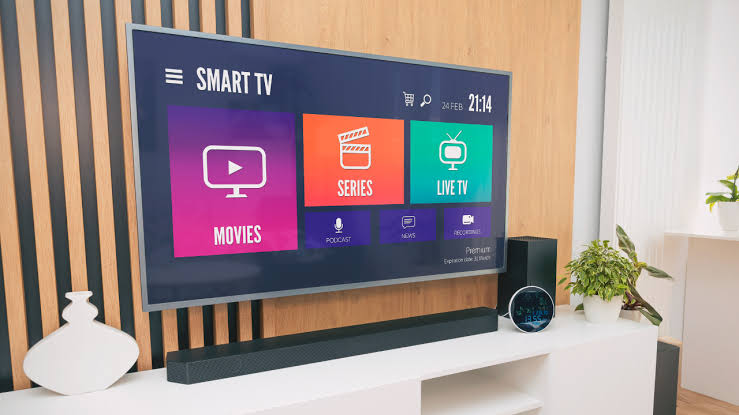
Discover how IPTV for Smart TV works, its benefits, setup steps, features, pricing, use cases, alternatives, and 2026 streaming trends.
IPTV for Smart TV: Complete Guide to Choosing and Using IPTV in 2026
Introduction
Television viewing has changed significantly in recent years. Instead of depending entirely on traditional cable or satellite packages, viewers can now access television content through internet-based streaming technologies. One of the most searched options is IPTV for Smart TV, which allows compatible televisions to access live channels and other internet-delivered content through an IPTV service and a suitable application.

For learners, freelancers, startups, and small business owners, internet-based television can be particularly useful because it may provide a flexible way to watch entertainment, news, sports, educational programming, and international content without maintaining a traditional television setup.
However, choosing an IPTV solution is not simply about finding the service with the largest channel list. Reliability, compatibility, streaming quality, application support, pricing transparency, customer support, privacy, and legal content licensing all matter.
This guide explains IPTV for Smart TV from the ground up. You will learn what IPTV means, how it works, what features to look for, how to set it up, how different service models compare, what it can be used for, common advantages and disadvantages, alternatives, and what to expect from IPTV technology in 2026.
Important: IPTV is a technology for delivering television and video over internet networks. The legality of a particular IPTV service depends on the provider’s licensing and the laws applicable in your country. Always choose services that have appropriate rights to distribute the content they offer.
What Is IPTV for Smart TV?
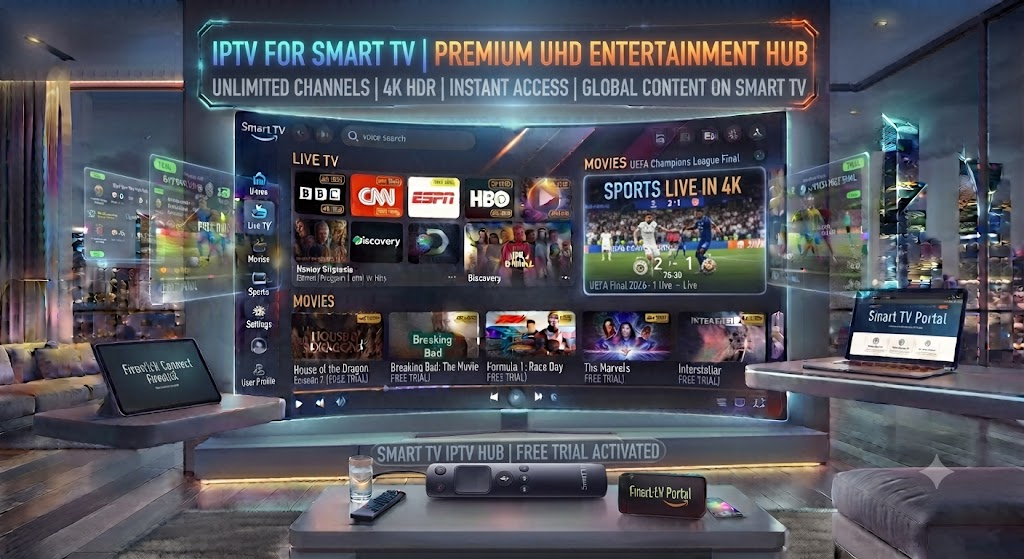
IPTV for Smart TV refers to television programming delivered through an internet connection using Internet Protocol technology and watched directly on a compatible Smart TV or through an external streaming device.
Unlike traditional broadcast television, IPTV sends video content through IP networks. Depending on the service, this can include live television, video-on-demand content, catch-up programming, recorded programs, and other interactive features.
A Smart TV can sometimes run an IPTV application directly. In other cases, users may connect an external device such as an Android TV device, Apple TV, Chromecast-compatible device, or Fire TV device.
The exact experience depends on three components:
1. IPTV Service
The provider supplies the content and the access credentials or subscription required to use the service.
2. IPTV Application
An IPTV application acts as the interface between your television and the service. Depending on the provider, you may receive a dedicated application or use a compatible third-party player.
3. Internet Connection
Because IPTV depends on internet connectivity, network quality has a direct effect on streaming performance.
A fast connection alone is not always enough. Network congestion, Wi-Fi interference, router performance, server capacity, and the quality of the stream can all affect playback.
How Does IPTV for Smart TV Work?
The basic process is relatively simple.
First, a provider obtains and distributes television or video content through an internet-based infrastructure. The content is encoded and delivered through IP networks. Your IPTV application communicates with the provider’s platform and receives the available streams.
Your Smart TV then decodes the video and displays it on the screen.
The process can be summarized as:
Content source → IPTV platform → Internet connection → IPTV application → Smart TV
Some services use different delivery technologies and infrastructure, so performance can vary considerably between providers.
Live IPTV
Live IPTV allows viewers to watch channels as they are being broadcast or streamed.
Video on Demand
Video-on-demand functionality allows users to select content and watch it when convenient rather than following a fixed broadcast schedule.
Catch-Up TV
Some platforms provide previously broadcast programs for a limited period, allowing users to watch content they missed.
Electronic Program Guide
An EPG displays channel schedules and program information, making it easier to discover upcoming content.
Why IPTV for Smart TV Matters in 2026
The streaming market continues to evolve toward more flexible, internet-connected entertainment. Consumers increasingly expect television platforms to provide convenient interfaces, personalized recommendations, multi-device access, and high-quality streaming.
Smart TVs are especially important because they combine television hardware with internet connectivity and application ecosystems.
For users, IPTV can potentially reduce the need to switch between multiple physical devices. Instead, an IPTV application can become another application within the Smart TV environment.
Several developments make IPTV particularly relevant in 2026.
Growing Smart TV Adoption
Modern televisions increasingly include built-in operating systems, application stores, voice controls, and internet connectivity.
More Flexible Viewing
Internet-based services allow viewers to watch content at times and locations supported by their subscriptions and devices.
Multi-Device Expectations
Many users expect their subscriptions to work across televisions, phones, tablets, computers, and streaming devices.
Better Streaming Technology
Modern video compression, adaptive bitrate streaming, and improved broadband infrastructure can support higher-resolution content when the provider and network are capable.
Personalized Viewing
Streaming platforms increasingly use recommendation systems, searchable libraries, watchlists, and personalized interfaces.
These trends do not mean every IPTV service is automatically good. Provider quality remains one of the most important factors.
Key Benefits of IPTV for Smart TV
1. Convenient Access
A Smart TV can provide a centralized entertainment experience without requiring a separate traditional television receiver.
2. Internet-Based Delivery
IPTV uses internet connectivity rather than conventional broadcast or satellite delivery methods.
3. Flexible Content
Depending on the service, users may access live channels, on-demand programming, catch-up features, and other content categories.
4. High-Resolution Streaming
Some legitimate services support HD, Full HD, and 4K streams. Actual quality depends on the content source, subscription, device, application, and network.
5. Electronic Program Guides
An EPG can make channel navigation significantly easier than scrolling through an unorganized list.
6. Multiple Device Options
Many services support multiple platforms, although simultaneous streams and device limits vary by subscription.
7. Search and Organization
A well-designed IPTV application can make it easier to search channels, categories, movies, programs, or other content.
8. Potentially Flexible Pricing
Internet television services may offer monthly, annual, or other subscription structures. Pricing varies significantly by provider.
9. International Content
Depending on licensing, IPTV platforms can provide access to programming from different countries and regions.
10. Suitable for Modern Workflows
Freelancers and small business owners can use Smart TVs for background news, educational programs, presentations, hospitality environments, or entertainment during breaks, provided the service’s licensing permits the intended use.
Top IPTV Providers, Tools, and Services
There is no universally “best IPTV service” for every viewer. A better approach is to evaluate providers according to legality, compatibility, content rights, reliability, pricing, customer support, and application quality.
When researching a service, look for the following characteristics.
Licensed Content
The provider should clearly explain its rights or authorization to distribute the channels and programs it offers.
Compatible Smart TV Application
Check whether the service officially supports your television operating system.
Transparent Pricing
Avoid providers that hide important charges until checkout.
Clear Device Policy
Understand how many devices are supported and whether simultaneous streaming is permitted.
Reliable Customer Support
A responsive support team can be valuable when activation, application compatibility, or account problems occur.
Trial or Refund Policy
Where offered legally, a trial or refund policy can help customers evaluate service quality before committing to a longer subscription.
Security and Privacy
Review the provider’s privacy policy and understand what information it collects.
Rather than selecting a provider solely because it advertises thousands of channels, compare the actual features that matter to your viewing habits.
Comparison: IPTV vs Traditional TV vs Streaming Platforms
A traditional cable or satellite service typically delivers television through dedicated distribution infrastructure. IPTV uses internet-based delivery, while mainstream streaming platforms generally focus heavily on on-demand programming and may also provide live content.
IPTV
Best for: Users looking for internet-delivered television and, where supported, live channels and on-demand programming.
Main advantage: Flexible internet-based delivery.
Potential drawback: Experience depends on provider infrastructure and internet quality.
Cable or Satellite TV
Best for: Viewers who prefer conventional television packages and established broadcast infrastructure.
Main advantage: Familiar channel-based experience.
Potential drawback: Packages can include channels users rarely watch and may involve equipment or installation requirements.
Mainstream Streaming Services
Best for: Users primarily interested in movies, series, documentaries, and original programming.
Main advantage: Strong on-demand interfaces and extensive libraries.
Potential drawback: Live channel availability varies, and multiple subscriptions may be required for different content.
Important IPTV Features to Look For
Not every IPTV service provides the same experience. Before purchasing a subscription, evaluate the following features.
Electronic Program Guide
A good EPG organizes channels and schedules into a convenient interface.
Adaptive Streaming
Adaptive bitrate technology can adjust video quality based on available bandwidth, potentially reducing buffering when network conditions change.
Catch-Up Function
Catch-up programming can be useful for users who miss scheduled broadcasts.
Video on Demand
A VOD library provides additional flexibility beyond live television.
Multi-Device Support
If you frequently move between devices, check whether your subscription supports Smart TVs, smartphones, tablets, computers, and streaming devices.
Parental Controls
Families may benefit from PIN-based restrictions or content controls where supported.
Favorites
A favorites feature can reduce the time required to locate frequently watched channels.
Search
A reliable search system becomes increasingly important when a service has a large content library.
Subtitle and Audio Support
Depending on the content, multiple subtitle or audio options can improve accessibility and international viewing.
Customer Support
Technical support can be especially important for users who are unfamiliar with IPTV configuration.
IPTV for Smart TV Pricing
Pricing differs significantly depending on the provider, region, content rights, features, and subscription length.
Instead of focusing only on the lowest price, consider the overall value.
Monthly Plans
Monthly subscriptions generally offer flexibility and allow users to evaluate a service without a long-term commitment.
Quarterly Plans
Quarterly plans may provide a balance between flexibility and potential savings.
Annual Plans
Annual subscriptions can sometimes reduce the effective monthly price but require greater commitment.
Free Trials
Some legitimate providers may offer limited trials. Always read the terms carefully and confirm whether the trial automatically converts into a paid subscription.
What to Check Before Paying
Review:
- Total subscription cost
- Taxes or additional fees
- Number of supported devices
- Simultaneous-stream limits
- Refund policy
- Content licensing information
- Application compatibility
- Customer support availability
- Renewal conditions
A cheap subscription is not necessarily good value if the application is unreliable or the service does not support your Smart TV.
How to Set Up IPTV for Smart TV
The exact installation process depends on the Smart TV manufacturer, operating system, IPTV provider, and application.
Step 1: Check Your Smart TV
Identify the television brand and operating system.
Step 2: Verify Service Compatibility
Before subscribing, check whether the IPTV provider officially supports your Smart TV platform.
Step 3: Choose a Compatible Application
Use the official application provided or recommended by the legitimate service.
Step 4: Install the Application
Download the application from your TV’s official application store when available.
Step 5: Sign In
Enter the credentials or activation information supplied by your provider.
Step 6: Configure the Application
Depending on the application, you may be able to configure the EPG, favorites, subtitles, parental controls, or playback preferences.
Step 7: Test Playback
Start with a lower-resolution stream if your network is struggling. Then test higher-quality streams once you confirm that playback is stable.
Internet Speed Requirements
Internet speed is an important factor in streaming quality.
As a general starting point, users may consider approximately:
- SD: around 5 Mbps
- HD: around 10 Mbps
- Full HD: around 15–20 Mbps
- 4K: around 25–50 Mbps or more
These figures are practical guidelines rather than guarantees.
A household with multiple active devices may require substantially more bandwidth. For example, if someone is streaming IPTV while another person is attending a video conference and another device is downloading a large file, the available bandwidth for the television can decrease.
Wired vs Wi-Fi
Ethernet can provide a more consistent connection than Wi-Fi in many home environments.
If Ethernet is unavailable, position the router appropriately and consider a modern Wi-Fi standard supported by your television and router.
Use Cases for IPTV for Smart TV
Home Entertainment
The most common use case is watching television, movies, news, documentaries, and other available programming.
Learners and Students
Educational channels, documentaries, language-learning content, news programs, and academic programming can supplement other learning resources.
Freelancers
Freelancers may use a Smart TV for news monitoring, background programming, or entertainment during breaks.
Startups
A Smart TV in a shared office can display permitted news, business information, dashboards, or entertainment in common areas.
Small Businesses
Hospitality businesses, waiting areas, lounges, and other commercial environments may use television displays, but businesses should confirm that their content provider and subscription specifically permit commercial use.
International Viewers
Users who live away from their home country may seek legally licensed international programming available through internet-based services.
IPTV for Smart TV Is Best For
Best for Flexible Viewing
IPTV can be suitable for people who prefer internet-based television and want access through a Smart TV.
Best for Multi-Device Households
A service with legitimate multi-device support may be useful for households that watch content on several screens.
Best for International Content
Where legally available, IPTV can provide access to regional or international programming.
Best for Tech-Savvy Users
Users comfortable with Smart TV applications, network configuration, and streaming settings may find IPTV particularly convenient.
Best for Small Businesses With Proper Licensing
Businesses can benefit from digital television displays when they select services with appropriate commercial viewing rights.
Pros and Cons of IPTV for Smart TV
Pros
- Internet-based access
- Smart TV convenience
- Potential HD and 4K support
- Live television options
- Potential video-on-demand features
- EPG support
- Multi-device possibilities
- Flexible subscription models
- International programming options
- Modern application interfaces
Cons
- Requires a reliable internet connection
- Service quality varies between providers
- Some Smart TVs may have limited application support
- Poor providers can experience buffering or downtime
- Device limits may apply
- Licensing differs between services and countries
- Some applications may be difficult for beginners
- Annual subscriptions can create risk if service quality is poor
Common Mistakes to Avoid
Choosing a Service Only Because of Channel Count
A huge channel number does not guarantee reliable or legally licensed content.
Ignoring Smart TV Compatibility
Always confirm compatibility before purchasing.
Buying a Long Subscription Immediately
If a provider offers a legitimate trial or short-term plan, evaluating performance first can reduce risk.
Using Unofficial Applications
Unofficial or modified applications can create security and privacy concerns.
Ignoring Your Network
A powerful Smart TV cannot compensate for an unstable internet connection.
Forgetting Device Limits
Check how many devices can be registered and how many can stream simultaneously.
Assuming Every IPTV Service Is Legal
IPTV technology itself is legal. However, providers must have appropriate rights to distribute the content they offer.
Best Alternatives to IPTV for Smart TV
IPTV is not the only option.
Cable Television
Cable remains suitable for viewers who prefer traditional channel packages and provider-managed equipment.
Satellite Television
Satellite can be useful in locations where terrestrial broadband infrastructure is limited.
Free-to-Air Television
Free-to-air channels can provide television programming without a paid subscription where available.
Mainstream Streaming Services
Subscription streaming platforms are often ideal for users who prioritize on-demand movies and television series.
Free Legal Streaming Platforms
Depending on your country, various legal platforms provide free ad-supported programming.
YouTube and Similar Video Platforms
These can provide news, educational content, creator programming, documentaries, and entertainment without requiring a traditional IPTV subscription.
Security and Privacy Considerations
Streaming services require users to think about digital security.
Use strong, unique account credentials and avoid sharing passwords unnecessarily.
Download applications from trusted sources whenever possible. Keep your Smart TV operating system and applications updated.
Be cautious when a provider asks for unnecessary personal information or payment details.
A legitimate service should also provide understandable information about privacy and billing.
How to Choose the Right IPTV Service
A simple evaluation framework can help.
Content
Does the provider legally offer the channels and programming you actually watch?
Compatibility
Does it support your exact Smart TV platform?
Reliability
Look for evidence of consistent service performance rather than relying only on advertising claims.
Quality
Check whether the service supports the resolution and playback features you need.
Pricing
Compare total costs rather than focusing on a headline monthly price.
Support
Determine whether help is available when something goes wrong.
Policies
Read cancellation, refund, renewal, privacy, and device policies before paying.
Reputation
Look for independent user feedback and credible reviews, while remembering that online reviews can be manipulated or incomplete.
Future Trends in IPTV and Smart TV Streaming
The future of IPTV is likely to be influenced by broader developments in connected television.
More 4K Content
Higher-resolution video is becoming increasingly common as television hardware and broadband networks improve.
Smarter Recommendations
Artificial intelligence and machine-learning systems can help personalize content discovery.
Better Voice Search
Voice assistants can make channel and content discovery faster.
Improved Multi-Device Experiences
Users increasingly expect seamless access across televisions, mobile devices, tablets, and computers.
Cloud-Based Television
Cloud infrastructure can make services more scalable and enable features such as cloud recording, catch-up programming, and personalized experiences.
More Interactive Television
Future services may combine live programming with interactive information, shopping, polls, social features, and other connected experiences.
Stronger Content Protection
As streaming grows, providers are likely to continue investing in digital rights management, authentication, account security, and anti-piracy technologies.
Frequently Asked Questions
What is IPTV for Smart TV?
IPTV for Smart TV is a way of delivering television and video programming through internet networks to a compatible Smart TV or connected streaming device.
Can I use IPTV directly on a Smart TV?
Yes, if your Smart TV operating system supports a compatible IPTV application and your provider supports that platform.
Do I need a special IPTV box?
Not always. Some Smart TVs can run compatible applications directly. An external streaming device may be useful if your television does not support the required application.
Does IPTV require internet?
Yes. IPTV depends on an internet or IP-based network connection, so network quality can affect playback.
What internet speed is best for IPTV?
For HD streaming, around 10 Mbps can be a reasonable starting point. Full HD and 4K may require more bandwidth, particularly when several devices share the same connection.
Can IPTV support 4K?
Some services support 4K content, but your provider, subscription, television, application, internet connection, and the specific program must all support the required quality.
Is IPTV legal?
IPTV is a technology and is not inherently illegal. The important issue is whether a provider has the appropriate rights and licenses to distribute its content in the relevant market.
Can I watch IPTV on multiple devices?
Some subscriptions support multiple devices, but simultaneous streaming limits vary. Always check the provider’s terms.
Is IPTV better than cable?
It depends on your needs. IPTV can offer internet-based flexibility and modern application features, while cable can provide a familiar traditional television experience. Neither is automatically better for everyone.
Can IPTV work over Wi-Fi?
Yes. IPTV can work over Wi-Fi, although a stable wired connection may be preferable when available, especially for high-resolution streaming.
Why does IPTV buffer?
Buffering can result from insufficient bandwidth, Wi-Fi interference, network congestion, provider-side problems, overloaded servers, application issues, or problems with the stream itself.
How can I reduce buffering?
Test your internet connection, restart networking equipment, reduce unnecessary network activity, improve Wi-Fi conditions, update your application, and contact your legitimate provider if the problem continues.
Can businesses use IPTV?
Businesses can use internet-delivered television when the provider’s license and subscription terms permit commercial use. A consumer subscription should not automatically be assumed to include commercial viewing rights.
Should I choose a monthly or yearly IPTV subscription?
A monthly plan generally provides greater flexibility, while an annual plan may reduce the effective monthly cost. Review the provider carefully before making a long-term commitment.
What should I check before buying IPTV?
Check content licensing, Smart TV compatibility, pricing, device limits, streaming quality, customer support, refund terms, privacy practices, and cancellation conditions.
Final Verdict
IPTV for Smart TV can be a convenient way to access internet-delivered television and video content, particularly for viewers who prefer flexible digital entertainment rather than traditional television infrastructure.
The biggest advantage is not simply the number of channels advertised. A high-quality IPTV experience depends on the combination of a reliable provider, legally licensed content, a compatible Smart TV application, adequate internet bandwidth, good customer support, and transparent subscription terms.
For learners, freelancers, startups, and small business owners, IPTV can serve several purposes ranging from everyday entertainment and international programming to educational viewing and properly licensed commercial displays.
Before subscribing, compare services carefully. Confirm compatibility with your Smart TV, understand the pricing and device policy, examine the provider’s licensing information, and test the service when a legitimate trial or flexible plan is available.
Most importantly, remember that IPTV technology and IPTV services are not the same thing. The technology is simply a method of delivering video over IP networks; the legality and quality of the service depend on how the provider operates and whether it has the necessary rights to distribute its content.
With the right provider, suitable hardware, and a stable internet connection, IPTV can be a practical part of a modern Smart TV setup in 2026.
Author Bio
About the Author
The author is an SEO content strategist and technology writer focused on streaming technology, Smart TV platforms, digital entertainment, and consumer technology. Content is developed with an emphasis on practical user experience, transparent information, search intent, and responsible technology guidance.
Editorial approach: Information should be evaluated against current product specifications, provider policies, regional availability, and applicable laws before making a purchasing decision.