
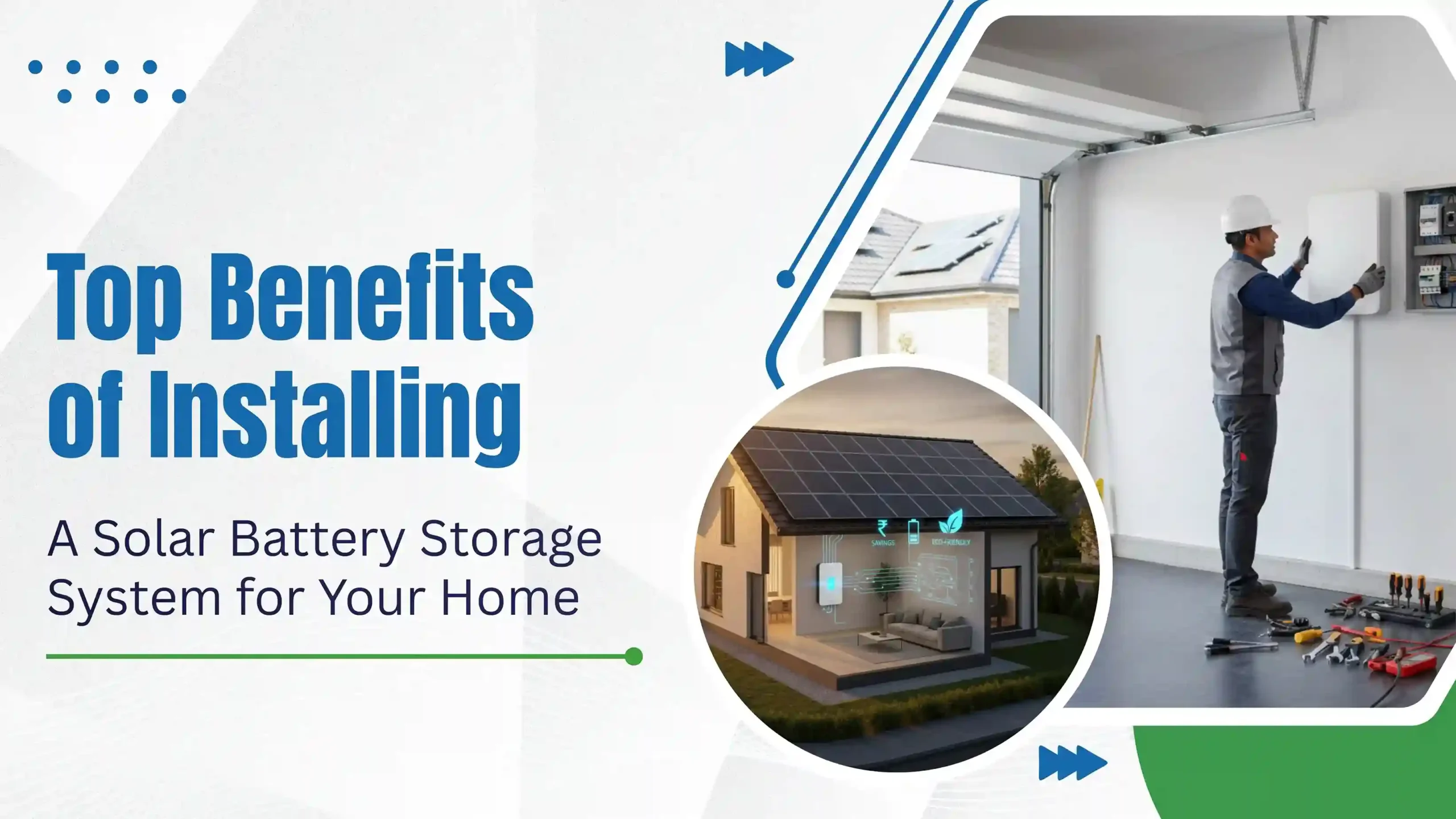
Residential electricity consumption is rising due to accelerating electrification, digitalization, and increased HVAC dependency, placing unprecedented demand on centralized power grids. Aging transmission infrastructure, peak demand volatility, and climate-induced disruptions are contributing to grid instability and rising outage frequency. Concurrently, the global transition toward decentralized renewable energy models is accelerating, with rooftop solar emerging as a major distributed generation asset.
However, photovoltaic generation is inherently intermittent, and production often does not align with residential load curves. Energy storage resolves this mismatch. Battery storage systems enable solar energy to be stored and dispatched on demand, transforming passive generation assets into active energy management systems. The integration of solar and battery storage systems is therefore becoming foundational to resilient, self-sustaining residential power infrastructure.
- Energy Independence and Grid Resilience
The main technical benefit of the battery storage and solar power is the removal of grid dependency. The conventional grid-tied solar systems with no storage are required to shut down during utility outages due to anti-islanding protection protocols designed to ensure lineworker safety.
Backup Power and Priority of Critical loads
A battery system can be used to allow smooth switching to off-grid mode during a failure when it has an automatic transfer switch (ATS) and a high-performance inverter. Home owners will be allowed to classify essential circuits including refrigeration, medical equipment and security systems, so that they run continuously. They do not require any fuel at all, the systems have minimal maintenance requirements compared to combustion-based backup generators.
Flexibility Through LiFePO4 Chemistry
In contemporary solar battery storage technologies, Lithium Iron Phosphate (LiFePO4) chemistry is predominantly used. LiFePO4 is thermally more stable and has a longer cycle life than older lead-acid or conventional Lithium-ion (NMC) versions, which means that the system is a strong asset that will last 10–15 years of daily cycling.
- Peak Load Management and Cost Optimization
There is a trend in the electricity providers to switch to Time-of-Use (ToU) pricing models. In such structures, the energy used in the late afternoon and early evening hours is much more costly than the prices in the middle of the day or at midnight.
Time-of-Use (ToU) Arbitrage
Peak Shaving is possible with a battery system. The system charges the battery during peak solar production periods (low demand/low cost) and discharges when the demand is at the peak (high demand/high cost) in the evening. This arbitrage will mean that the homeowner does not have to be exposed to high-level utility rates; that is the direct optimization of the fiscal accolade of the solar investment.
Demand Charge Reduction
Powering a battery in areas where residential clients are charged on demand, i.e. according to the highest power level utilized within an interval, can smooth the load profile. The system limits metered demand to the costly levels by discharging stored energy during demand spikes in household usage.
- Optimizing the use of Solar Energy
In its absence, a high rate of solar energy is fed back to the grid. The export energy payments (Feed-in Tariffs) in most jurisdictions are also considerably less than the retail price of electricity.
Self-Consumption and Curtailment Cutback
The solar and battery storage systems enhance the self-consumption ratio. Instead of losing money through selling the surplus electrons, the system stores them to be used in the future. This also eliminates the concept of curtailment whereby inverters will reduce production due to the excess that will not be absorbed by the grid. The household is able to maximize the use of each kilowatt-hour (kWh) produced by the solar panels & battery storage arrangement by storing this energy.
Round-Trip Efficiency
The measure of technical performance is round-trip efficiency – the proportion of energy that can be recovered in storage of the energy consumed to charge the storage. Premium systems have reached over 90 percent efficiencies which reduce the energy wastage of converting DC to AC and vice versa.
- Increased System performance and efficiency monitoring
Storage solutions are no longer passive hardware, but are complex, software based energy nodes. These insights enable predictive maintenance, load forecasting, and performance analytics within modern solar battery storage systems.
Hybrid vs. AC-Coupled Systems
- Hybrid Systems: A single inverter manages both photovoltaic generation and battery storage. This architecture minimizes DC-to-AC conversion losses and simplifies installation.
- AC-Coupled Systems: Solar arrays and batteries operate through separate inverters. This configuration is commonly used when retrofitting storage into existing solar installations.
Energy Management Systems (EMS)
Real time monitoring and autonomous decision making is made possible through integration of the Energy Management System (EMS). These systems examine weather data, past utilization history and utility rates framework to identify the most effective charging/discharging cycle.
- Environmental and Sustainability Impact
Deep decarbonization of the residential sector is a condition that is contingent upon the implementation of solar battery storage systems.
Fossil Fuel Displacement: When homeowners store the solar energy to use at night, they are able to avoid the necessity of drawing on the grid during the so-called peak hours during which utilities would normally use natural gas or coal plants, which are carbon intensive.
Net-Zero Transition: The batteries will enable a transition where homes become “Net-Zero energy profile, where annual generation equals annual consumption, even during periods without solar irradiance.
- Scalability and Future-Ready Infrastructure
The household demand of energy in the year 2026 may be lower than it will be in 2030 as more households will be fully electrified.
EV Integration and Modular Expansion
Most existing battery designs are also modular and can be stacked to expand capacity (kWh) or power output (kW) with the demands. Moreover, bidirectional charging (Vehicle-to-Home or V2H) is also becoming standard, which means that the battery in an electric vehicle can also serve as a second or third storage reserve, and the home can be fully integrated into a smart energy system.
- ROI and Value of the Property Growth
From a financial standpoint, solar power and battery storage deployments are emerging as critical residential capital improvements influencing long-term property valuation.
Depth of discharge (DoD) and Payback Period
The Depth of Discharge (DoD) of the system is usually associated with its financial feasibility. Contemporary lithium-based systems can be operated at a DoD of 90 to 100 percent, or almost the full amount of stored energy can be utilized without causing battery cell damage. Combined with increasing utility costs, High DoD decreases the payback period, and can achieve full ROI in 7 to 9 years, with the system continuing to add value throughout the rest of its life.
8. The Policy Support and Government Incentives
There is a change of regulatory structures towards storage. Although net metering was an option previously to enable the grid to serve as a virtual battery, in most cases, utilities are transitioning to what is known as Net Billing. In the case of Net Billing, the financial case of solar panels and battery storage cannot be ignored because now the battery will be the only means of preserving the entire worth of the generated energy. Also, the Federal and regional tax credits — such as investment tax credits (ITC) in the United States — may decrease the overall expenditure of a storage system by up to 30 percent.
Conclusion
The transition toward solar and battery storage systems represents a shift from passive energy consumption to active energy management. As the grid faces increasing volatility and utility rates continue their upward trajectory, the ability to generate, store, and manage power locally is no longer an elective upgrade but a strategic necessity.
By optimizing self-consumption, providing mission-critical backup, and enabling participation in a smarter, greener grid, solar battery storage systems ensure long-term energy security and financial resilience for the modern homeowner.