
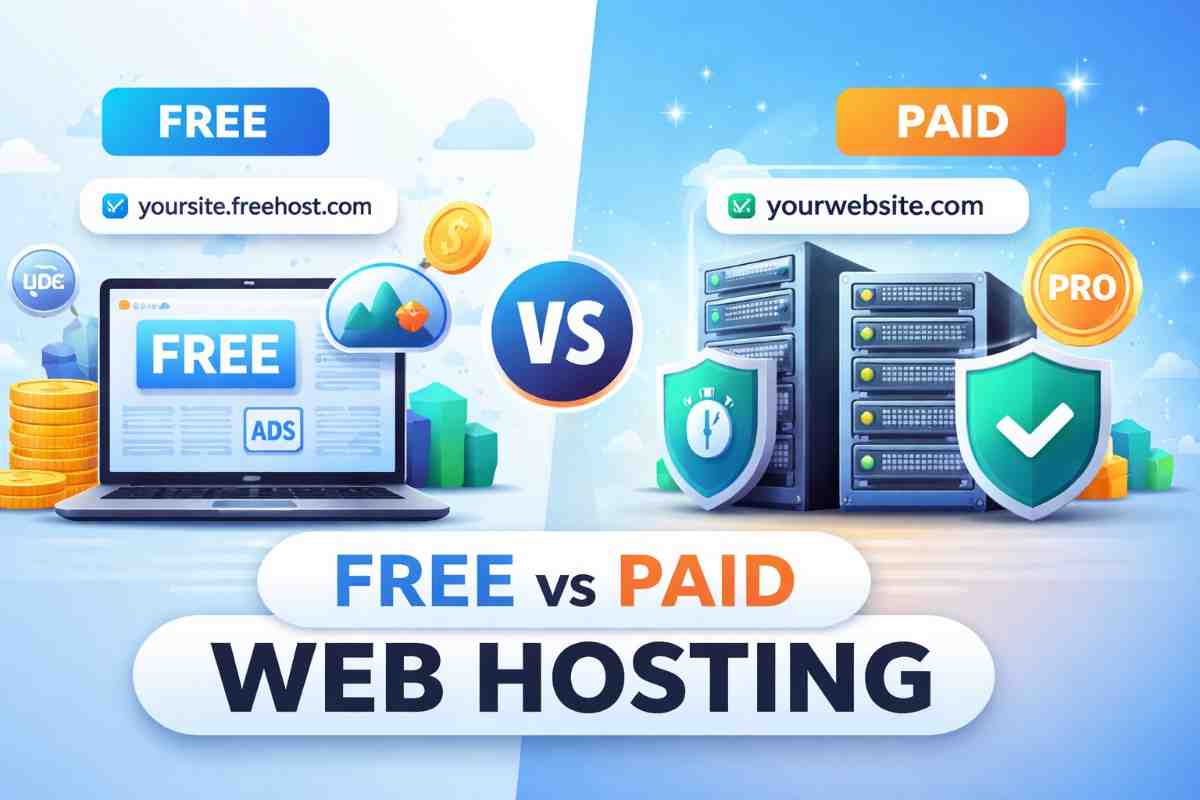
Choosing the right web hosting is one of the most important decisions when building a website. Whether you are starting a blog, business website, eCommerce store, or portfolio, the debate of often comes first.
Many beginners are attracted to free hosting services because they require no upfront investment. However, paid web hosting offers advanced features, better performance, and long-term reliability.
In this detailed guide, we will compare free and paid hosting based on performance, security, pricing, scalability, and SEO impact—helping you make the best decision for your needs.

What is Free Web Hosting?
Free web hosting allows users to host a website without paying any fees. These services are typically offered by hosting providers as a way to attract beginners or promote their premium plans.
Key Features of Free Hosting:
- No cost hosting
- Limited storage and bandwidth
- Subdomain (e.g., yoursite.provider.com)
- Basic website builder tools
- Limited customer support
Popular Use Cases:
- Personal blogs
- Testing websites
- Student projects
- Learning web development
What is Paid Web Hosting?
Paid web hosting requires a monthly or yearly fee and provides professional-grade services. It is suitable for businesses, bloggers, and anyone serious about building an online presence.
Key Features of Paid Hosting:
- Custom domain support
- High performance servers
- Better uptime guarantee
- Advanced security features
- Full customer support (24/7)
- Scalability options
Types of Paid Hosting:
- Shared hosting
- VPS hosting
- Dedicated hosting
- Cloud hosting
- Managed WordPress hosting
Free vs Paid Web Hosting: Key Differences
1. Performance and Speed
Website speed is a critical ranking factor for SEO.
- Free Hosting: Slow loading speed due to shared resources
- Paid Hosting: Optimized servers with fast loading times
Fast websites improve user experience and boost rankings on search engines.
2. Uptime and Reliability
Uptime determines how often your website is available online.
- Free Hosting: Frequent downtime, unreliable servers
- Paid Hosting: 99.9% uptime guarantee
If your website is down often, you can lose visitors and revenue.
3. Storage and Bandwidth
- Free Hosting: Limited storage and bandwidth
- Paid Hosting: Scalable storage and unlimited bandwidth options
Paid hosting is ideal for growing websites with high traffic.
4. Security Features
Security is essential for protecting your website and user data.
- Free Hosting: Minimal security, no SSL in many cases
- Paid Hosting: SSL certificates, malware protection, firewalls
Secure hosting improves trust and SEO rankings.
5. Custom Domain
- Free Hosting: Subdomain only
- Paid Hosting: Custom domain (e.g., yourwebsite.com)
A custom domain builds credibility and brand identity.
6. Ads and Branding
- Free Hosting: Displays provider ads on your site
- Paid Hosting: No ads, full control
Ads can negatively impact user experience.
7. Customer Support
- Free Hosting: Limited or no support
- Paid Hosting: 24/7 technical support
Reliable support is crucial for resolving issues quickly.
8. SEO Benefits
Search engine optimization (SEO) is essential for online visibility.
- Free Hosting: Poor SEO performance
- Paid Hosting: Better rankings due to speed and reliability
Paid hosting supports SEO-friendly features like fast loading, uptime, and security.
Pros & Cons of Free Web Hosting
Pros:
- Completely free
- Easy to start
- No financial risk
- Beginner-friendly
Cons:
- Limited features
- Poor performance
- Security risks
- Ads on your website
- No scalability
Pros & Cons of Paid Web Hosting
Pros:
- High performance and speed
- Better security
- Professional features
- Custom domain support
- Scalable resources
Cons:
- Monthly or yearly cost
- Requires technical understanding (for advanced plans)
Pricing Comparison
| Feature | Free Hosting | Paid Hosting |
|---|---|---|
| Cost | Free | ₹100 – ₹1000/month |
| Storage | Limited | Unlimited/Scalable |
| Bandwidth | Limited | Unlimited |
| Domain | Subdomain | Custom domain |
| Security | Basic | Advanced |
| Support | Limited | 24/7 Support |
Which Hosting is Best for Beginners?
For beginners, free hosting may seem attractive. However, if you are serious about your website, paid hosting is the better choice.
Choose Free Hosting If:
- You are learning web development
- You want to test a website idea
- You don’t need professional features
Choose Paid Hosting If:
- You want to start a blog or business
- You need better SEO performance
- You expect website growth
- You want full control and customization
Best Use Cases for Free Hosting
Free hosting is suitable for:
- Students practicing coding
- Hobby websites
- Temporary projects
- Demo websites
However, it is not recommended for:
- Business websites
- eCommerce stores
- Professional portfolios
Best Use Cases for Paid Hosting
Paid hosting is ideal for:
- Business websites
- Blogging websites
- Affiliate marketing sites
- eCommerce stores
- Portfolio websites
It ensures reliability, speed, and growth potential.
Impact on Website SEO
SEO plays a crucial role in driving traffic.
Free Hosting and SEO:
- Slow website speed
- Downtime issues
- No custom domain
- Lower search rankings
Paid Hosting and SEO:
- Fast loading speed
- High uptime
- SSL certificate
- Better ranking potential
Using paid hosting can significantly improve your website’s visibility on search engines like Google.
Security Comparison
Security is a major concern for website owners.
Free Hosting:
- No advanced protection
- Risk of hacking
- No backups
Paid Hosting:
- SSL encryption
- Daily backups
- Firewall protection
- Malware scanning
If you are handling user data, paid hosting is essential.
Scalability and Growth
As your website grows, hosting needs increase.
- Free Hosting: No scalability
- Paid Hosting: Easy upgrades (shared → VPS → dedicated)
Paid hosting allows your website to handle increased traffic smoothly.
Control and Customization
- Free Hosting: Limited control
- Paid Hosting: Full access (cPanel, FTP, databases)
With paid hosting, you can install applications like WordPress, customize themes, and optimize performance.
Free vs Paid Web Hosting: Final Verdict
When comparing , the difference is clear.
- Free hosting is good for beginners and learning
- Paid hosting is essential for professional websites
If your goal is to build a successful website, generate traffic, or earn money online, investing in paid hosting is the best decision.
Conclusion
Choosing between free and paid hosting depends on your goals. While free hosting is useful for testing and learning, it lacks the performance, security, and reliability required for serious projects.
Paid hosting, on the other hand, provides everything you need to build a fast, secure, and scalable website. It also improves SEO, enhances user experience, and supports long-term growth.
In 2026, with increasing competition online, relying on free hosting can limit your success. Investing in a reliable paid hosting provider is a smart step toward building a strong online presence.
FAQs
Is free web hosting good for beginners?
Yes, free hosting is suitable for beginners who want to learn or test websites, but not for professional use.
2. Does paid hosting improve SEO?
Yes, paid hosting improves website speed, uptime, and security, which are important SEO ranking factors.
Can I switch from free to paid hosting?
Yes, most hosting providers allow easy migration from free to paid plans.
Is free hosting safe?
Free hosting has limited security features, so it may not be safe for sensitive data.
What is the best hosting option in 2026?
Paid hosting is the best option for performance, security, scalability, and SEO benefits.