
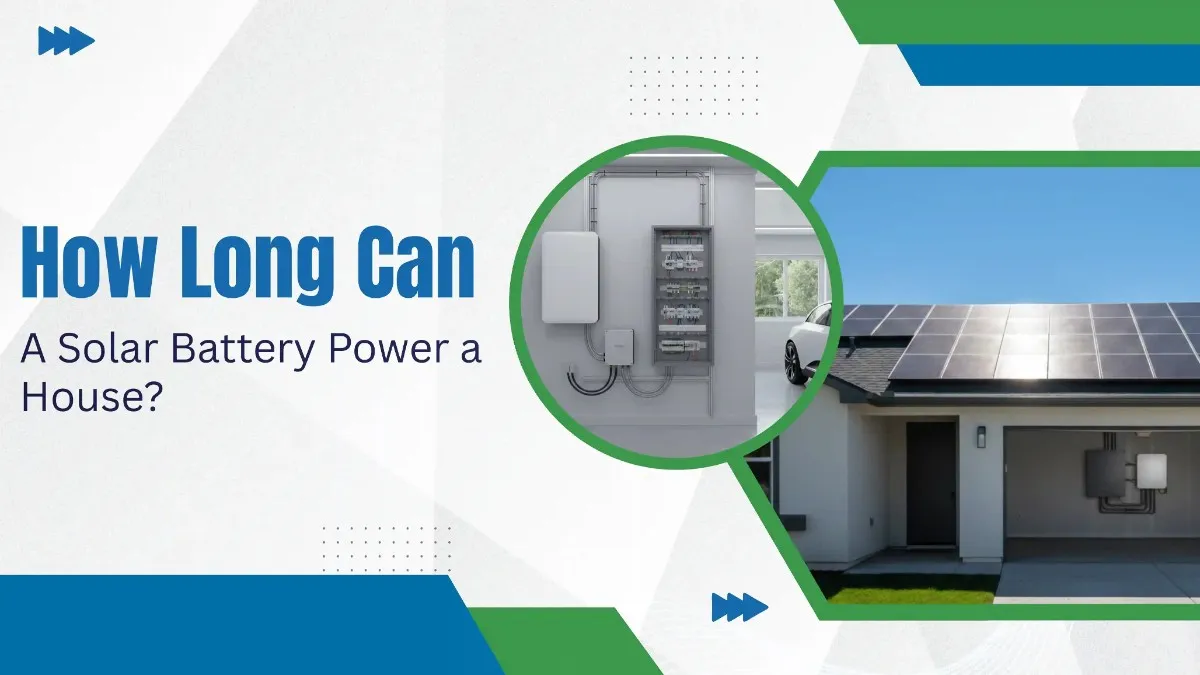
Solar batteries have emerged to be a critical part of the modern home energy management system that gives residential homes the option of storing energy produced by the solar photovoltaic (PV) systems that can be used during periods when the sun is not available. A Solar and Battery System enables homeowners to achieve energy independence, optimize electricity costs, and reduce reliance on the grid. Understanding how long a solar battery lasts is important in designing a viable system, scheduling energy use, and ensuring the reliability of stored energy.
A solar battery operates by storing all excess electricity generated during the peak sunlight and providing it whenever there is a need, especially in the evening hours or during low sun rays. The technical factors affecting the performance of the solar battery storage are battery chemistry, capacity, depth of discharge, and system integration.
Types of Solar Batteries
The choice of the type of battery is also paramount in finding out the effectiveness of the home in being powered by the stored solar energy. The most prevalent forms of solar batteries are:
- Lithium-Ion Batteries
Lithium-ion batteries are valued as the standard of residential solar storage in the industry because they are of high energy density, efficient, and have long lifecycles. Common lithium-ion batteries have an efficiency of 90-95 round trip, which means that there is very little energy lost in storage and discharge. Their small size and scalability make them the best in the installations of solar home batteries in Australia so that home owners can suit the capacity to their energy demands.
- Lead-Acid Batteries
A conventional alternative is a lead-acid battery which is more economical in the initial investment but less efficient and has a shorter lifespan than a lithium-ion. Having a 70-85% round trip efficiency and 500-1,500 cycle life, lead-acid batteries are more suitable in the backup system than in a continuous solar storage.
- Flow Batteries
Flow batteries have long life, deep discharge and can be used in large-scale solar storage. Their main disadvantage is that they are more expensive to start with, as well as have a bigger footprint, which is problematic with residential purposes.
The type of battery used influences directly the duration of the solar battery life in the different load conditions, which explains the need to ensure that the technology has been chosen as per the energy demand of the household.
Factors Affecting Solar Battery Duration
The variety of interdependent variables affects the time span of a solar battery to power a house. Key determinants include:
- Battery Capacity
The total energy stored in a battery can be defined by battery capacity which is in kilowatt-hours (kWh). An average family, with a daily consumption of 20 kWh, would need a minimum of 20 -25 kWh of battery capacity in order to have full overnight independence. Increased capacity of batteries means that a home will have the ability to operate a certain number of hours without the grid in the same proportion.
- Household Load
The number of appliances and heating/cooling systems used, the number of electric vehicles charged, and the consumption of energy patterns are major factors that determine the period of time a solar battery will last in the night. Homes that consume more electricity in the evening will burn up more stored energy.
- Depth of Discharge (DoD)
Depth of discharge is the percentage of the battery capacity which can be utilized without doing harm to the life of the battery. Batteries that use lithium-ion usually support 80-90 percent DoD and lead-acid batteries can only reach 50 percent. Reduced settings in DoD also increase the battery life, but decrease the amount of storage available, compromising nighttime autonomy.
- Efficiency and System Losses
There is a loss by all solar batteries in the charging and discharge process. The 5-10 percent loss in lithium-ion systems is characteristic and the maximum 30 percent loss in lead-acid systems. These losses must be accounted for when calculating the effective duration of stored energy.
- Ambient Temperature and Climate
High temperatures affect the efficiency and life cycle of batteries. Lithium-ion batteries are best used at 15–35°C whereby the efficiency decreases with an increase in temperature or below zero temperatures. The ability of solar cells to last long in Australia is influenced by climate variability which implies that there should be climate-adjusted battery management systems.
Solar Battery Performance at Night
The aspect of night operation is a key parameter of the utility of a battery. When the process of solar PV is terminated, energy in the battery is the major power source.
A typical lithium-ion battery can provide 6–12 hours of autonomy for an average home, depending on capacity and load. With the help of sophisticated battery management solutions, a household can track the discharge rate, prioritize critical loads, and understand how long a solar battery lasts at night to optimize evening energy use.
The evening peak usage, constant load of the appliances, and idle power consumption, among other factors, should be put into consideration during the system design. Energy-saving appliances and intelligent load restrictions can be integrated to improve the performance of the night and supplement the use of solar battery storage.
Solar Battery Lifespan in Australia
The regional climate, pattern of usage, and practices of maintenance determine the performance and stability of the solar batteries in Australia. Under typical conditions, Lithium-ion batteries in Australian homes have a life of 10-15 years and lead-acid batteries 3-7 years, which helps homeowners understand how long do solar batteries last in Australia under normal usage patterns.
Solar battery installations have been adopted more rapidly in Australia since incentives and solar subsidies by the government have encouraged many households to install the battery systems to supplement the rooftop PV arrays of 5-15 kWh. Adequate installation, constant check and following of the manufacturer-confirmed charge/discharge cycles are essential in increasing the life of the battery in different Australian weather conditions.
Integration with a Solar and Battery System
A Solar and Battery System combines solar PV panels, inverters and battery storage to form a unified energy system. The inverter is used to control how much electricity moves through the solar panels, the battery and loads at home so that optimum charging and discharging is provided.
The use of smart inverters can optimize the time of use so that energy stored can be used during the times when tariffs are highest, and therefore, is maximizing the saving of money. Also, the monitoring software will reveal the real-time data on the battery state-of-charge, use habits, and system operation, allowing homeowners to gain the right idea on how many years does a solar battery last under different circumstances.
Optimizing Solar Battery Storage
To optimize the performance and the lifespan of a solar battery, both technical optimization and responsible exploitation should be combined:
- Sizing Appropriately – Ensure battery capacity aligns with household consumption patterns and solar PV generation capacity.
- Temperature Control -Batteries need to be installed in cool or shaded areas to minimize thermal stress.
- Periodic Checks – Periodically check the maintenance, updates on software and performance to ensure efficiency.
- Load Prioritization – Prioritize the use of smart home systems to give priority to the stored energy to critical loads when operating at night.
- Depth of Discharge Management – This is to prevent frequent full discharges so as to increase battery life.
These measures will enable households to enhance system performance and predictability of solar battery storage and have reliable energy supply.
Conclusion
The ability of a solar battery to power a home is a dynamic function of battery capacity relative to household demand. While a 10kWh Solar Battery Storage unit can reliably power essential circuits for a full night, achieving whole-home autonomy often requires larger, modular systems (20kWh+) and disciplined energy management.
For Australian homeowners, the investment in a solar home battery Australia provides a robust hedge against rising energy prices and grid instability, provided the system is sized accurately and maintained within its technical thermal and discharge limits.