
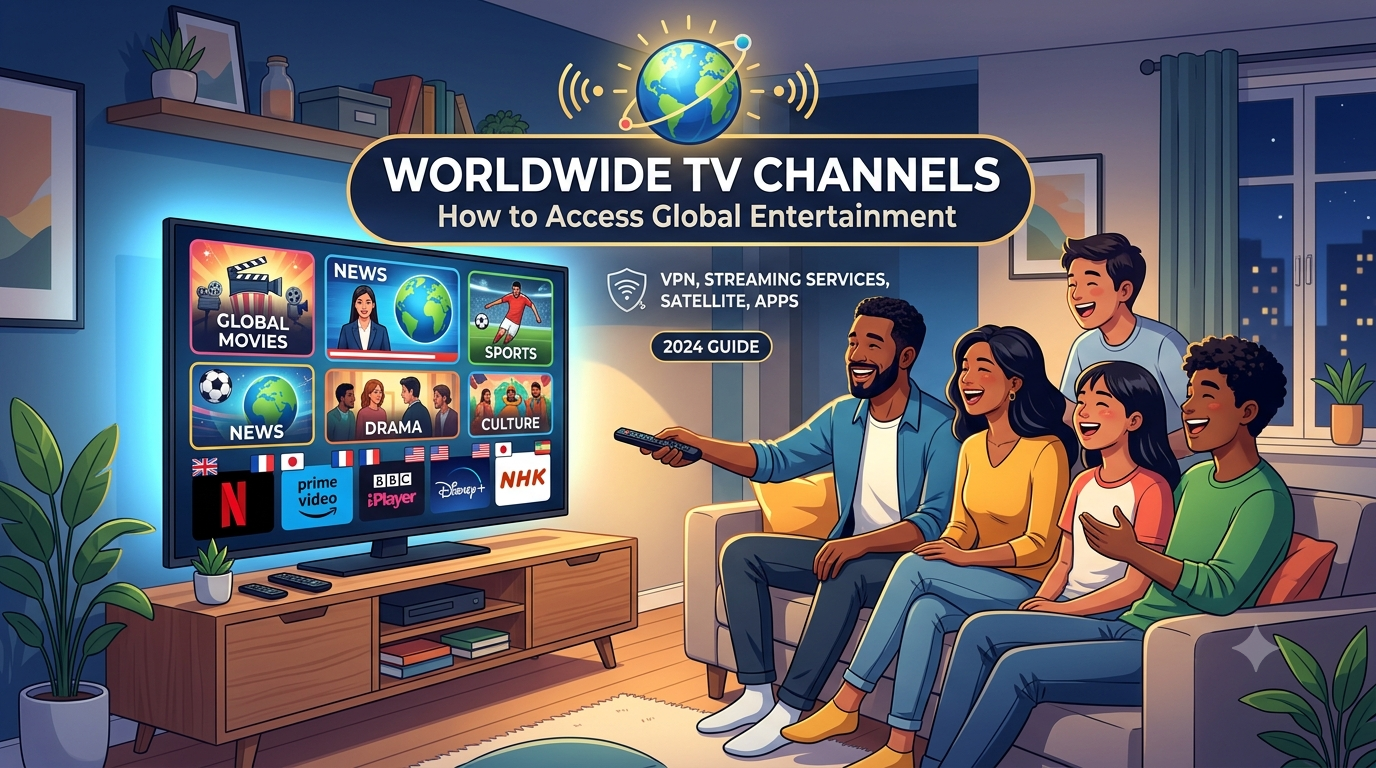
Access worldwide TV channels from home with the right streaming setup. Compare legal options, regional content, and tips for reliable global viewing.
Watching content from other countries used to mean expensive satellite equipment or unreliable workarounds. Today, streaming technology has changed the game entirely, making worldwide TV channels accessible to anyone with a decent internet connection.
This guide breaks down what you actually need to know before diving in.
Why Global Channel Access Matters More Now
People move across borders more than ever, whether for work, family, or personal choice. That shift created real demand for entertainment that feels like home, even when you’re thousands of miles away.
Think about it this way. An Indian family living in Canada might want their regional news. A British expat in Spain might miss Premier League commentary in their native accent.
Streaming platforms stepped in to fill that gap. They now offer access to channels spanning news, sports, drama, and entertainment from nearly every continent.
What Are Worldwide TV Channels, Exactly?
Worldwide TV channels refer to international broadcast content delivered through internet-based platforms rather than traditional satellite dishes. Instead of pointing equipment at the sky, your device pulls signals through broadband data.
This setup gives viewers access to programming from dozens of countries without needing separate hardware for each region. One subscription, multiple countries worth of content.
Here’s what typically gets included:
- News networks from various regions
- Sports coverage tied to specific countries or leagues
- Entertainment and drama channels in native languages
- Religious and cultural programming
- Kids’ content from international broadcasters
How Streaming Made Global Content Easier to Reach
Traditional cable companies rarely offered more than a handful of international add-ons, and those packages often cost extra on top of an already pricey bill.
Streaming changed that pricing structure completely. Providers can bundle regional content more efficiently since they aren’t tied to physical infrastructure in each area.
Better internet speeds played a huge role too. A decade ago, streaming international channels smoothly required a strong connection that many households didn’t have. Now, average home internet speeds handle it without much trouble.
Device flexibility also helped. Smart TVs, phones, tablets, and streaming boxes all support apps that carry global programming, so you’re not locked into one screen.
Choosing a Platform That Delivers Real Value
Not every streaming service handles international content the same way. Some quality factors separate reliable platforms from disappointing ones.
Channel Variety Across Regions
A strong platform covers multiple continents, not just one or two popular regions. Check whether the service lists specific countries or channel names before subscribing.
Stream Quality and Stability
International channels sometimes route through longer server distances, which can affect buffering. Look for providers with a reputation for stable streams during peak hours.
Language and Subtitle Options
If you’re watching content in a non-native language, subtitle availability matters. Some platforms offer multiple subtitle tracks, while others provide none at all.
Pricing Transparency
Compare monthly costs against what’s actually included. A cheap price tag means little if half the advertised channels rarely work.
Legal Sourcing
This point deserves serious attention. Licensed platforms pay broadcasters and content owners for distribution rights. Choosing legitimate services protects you from sudden shutdowns and keeps your payment information secure.
Popular Legal Options Worth Exploring
When researching an iptv service for international content, sticking with licensed, reputable platforms saves you headaches later. Here are a few worth checking out:
YouTube TV carries a solid mix of domestic and select international news channels alongside its standard lineup.
Sling TV offers international add-on packages covering Latin American, South Asian, and Middle Eastern content, letting you customize based on region.
Philo focuses more on domestic entertainment but pairs well with dedicated international apps for a fuller experience.
Fubo includes some international sports coverage, particularly appealing if you follow soccer leagues outside the US.
Pairing a mainstream iptv provider with a dedicated regional app often gives you the best combination of local and global content without breaking your budget.
Comparing Regional Content Types
Different regions tend to specialize in different programming styles. Understanding this helps set realistic expectations.
- South Asian channels often lean heavily into drama series, news, and Bollywood-style entertainment.
- European channels frequently balance news, football coverage, and scripted dramas.
- Middle Eastern channels typically emphasize news networks and family-oriented programming.
- Latin American channels commonly feature telenovelas, sports, and variety shows.
- East Asian channels often include drama series, anime, and lifestyle content.
Knowing what each region typically offers helps you pick a platform that actually matches your viewing habits.
Common Challenges With International Streaming
Global content access isn’t always seamless. A few recurring issues show up across providers.
- Licensing restrictions can limit certain shows to specific countries
- Time zone differences affect live broadcast scheduling
- Some channels update their lineups without much warning
- Server distance can occasionally impact stream quality
Being aware of these limitations ahead of time helps you set realistic expectations instead of feeling blindsided later.
Where Global Streaming Is Heading
Content licensing agreements are gradually becoming more flexible, which means providers can offer broader regional catalogs than they could five years ago.
Better compression technology is also reducing buffering issues, even for channels streamed from far away.
Expect more providers to launch dedicated regional bundles moving forward, giving viewers even more control over exactly which countries and languages they pay for.
Final Thoughts on Accessing Global Programming
Finding the best IPTV setup for international channels comes down to matching your specific needs with a provider that actually delivers on its promises. Focus on legal, licensed platforms, check their regional coverage carefully, and don’t hesitate to test a service before committing long term.
With the right platform, staying connected to news, sports, and entertainment from anywhere in the world is genuinely easier than it’s ever been.
Frequently Asked Questions
1. What are worldwide TV channels?
They’re international broadcast channels delivered through internet-based streaming rather than satellite dishes, covering news, sports, and entertainment from multiple countries.
2. Do I need special equipment to watch international channels?
No, most platforms work through existing devices like smart TVs, phones, tablets, and streaming boxes.
3. Is watching international channels through streaming legal?
Yes, as long as you use licensed platforms that have proper distribution agreements with broadcasters.
4. How much does international channel access typically cost?
Pricing varies by provider, often ranging from $10 to $40 monthly depending on how many regions and channels are included.
5. Can I watch content in my native language?
Many platforms offer channels in various native languages, along with subtitle options for select programming.
6. What internet speed do I need for international streaming?
A stable connection of at least 15-25 Mbps is generally recommended for smooth playback without frequent buffering.
7. Do all providers offer the same international channels?
No, channel lineups vary significantly between providers, so checking specific channel lists before subscribing matters.
8. Can I cancel my subscription if the content doesn’t meet expectations?
Most legitimate providers allow cancellation without long-term contracts, though policies vary by platform.
9. Why do some international channels have blackout restrictions?
Licensing agreements sometimes limit certain content to specific countries, which can cause temporary unavailability.
10. Are free trials available for testing international content?
Many providers offer short free trials, giving you a chance to evaluate channel quality before paying.