
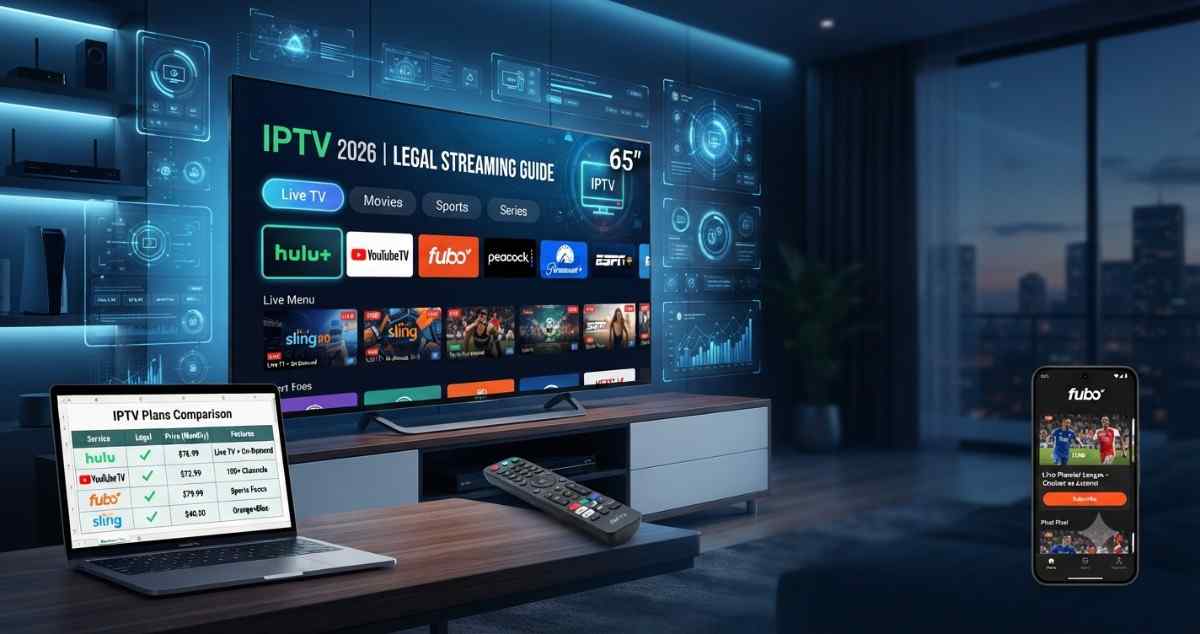
Compare the best IPTV plans for 2026 — pricing, features, pros/cons, and a buyer’s guide to help freelancers and small businesses choose right.
Introduction
If you’ve typed “IPTV plans” into Google, you’re probably trying to cut the cord, save money, and still watch live TV, sports, and news without a clunky cable box. That’s a smart instinct — but it’s also a space full of confusing offers, vague pricing, and services that promise “1000+ channels for $10” without ever explaining who actually holds the rights to broadcast that content.
🚀 Explore Best IPTV Plans 2026
👉 Check IPTV Plans 2026 🚀
This guide takes a different approach. Instead of pushing you toward unlicensed reseller services (which carry real legal and security risks — more on that below), we’ll walk through legitimate, licensed IPTV Player and live-TV streaming plans that freelancers, learners, startups, and small business owners can actually rely on in 2026. You’ll get a breakdown of what IPTV really is, why it matters this year, a full comparison and pricing table, real use cases, pros and cons, and a look at where the industry is heading next.
By the end of this article, you’ll know exactly which type of BEST IPTV Services 2026 plan fits your budget, your household size, and your streaming habits — without needing to gamble on a service that could disappear (or get you into legal trouble) overnight.
What Is “IPTV Plans”
IPTV stands for Internet Protocol Television — a method of delivering television content over the internet instead of through traditional satellite dishes or cable boxes. Instead of receiving a broadcast signal, your TV, phone, or streaming device pulls video data through your internet connection, the same way it would load a webpage or a video call.
An IPTV USA plan is simply a subscription that gives you access to a bundle of live channels, video-on-demand libraries, and sometimes cloud DVR storage, delivered this way.
How Legal IPTV Differs From “Grey Market” IPTV
This distinction matters a lot, and most articles skip it:
- Licensed IPTV providers (like YouTube TV, Hulu + Live TV, fuboTV, or a telecom’s own IPTV service) pay content owners for the right to distribute channels. You get reliable streams, customer support, and no legal exposure.
- Unlicensed “IPTV reseller” services — often advertised with huge channel counts at rock-bottom prices — typically redistribute copyrighted broadcasts without authorization. These carry real risks: sudden shutdowns, no support, malware-laden apps, and potential legal liability for the end user in some jurisdictions.
This guide focuses entirely on the first category, because that’s the only kind of “IPTV plan” worth recommending to a business, a freelancer, or anyone who values a stable, working service.
Core Components of an IPTV Plan
- Live channel bundles — news, entertainment, sports, local networks
- Video-on-demand (VOD) — movies and shows available anytime
- Cloud DVR — record and store content for later
- Multi-device access — smart TVs, phones, tablets, streaming sticks
- Simultaneous streams — how many devices can watch at once
How IPTV Technology Actually Works
At a technical level, IPTV delivers video as data packets over a standard internet connection, rather than as a continuous broadcast signal picked up by an antenna or satellite dish. When you press play on a live channel inside an IPTV app, your device sends a request to the provider’s servers, which then stream the video in small, continuously buffered segments. This is the same underlying technology used by services like YouTube and Netflix — the difference with IPTV is that the content is organized into “channels” that behave like traditional broadcast TV, complete with scheduled programming, rather than an on-demand catalog you browse whenever you want.
This matters practically in two ways. First, it means your internet connection quality directly affects your viewing experience — a slow or unstable connection can cause buffering or quality drops. Second, it means IPTV plans can be updated, expanded, or adjusted instantly by the provider, without you needing new hardware, since everything runs through software.
Who Should Consider an IPTV Plan
IPTV plans aren’t just for people replacing cable at home. They’re increasingly relevant for:
- Students and learners who want access to news and educational content without paying for a full cable package
- Freelancers working from flexible locations who need entertainment or background content without being tied to a physical TV setup
- Startups and small business owners who want a simple, low-maintenance way to display live content in an office, waiting room, or client space
- Households looking to reduce monthly entertainment costs compared to legacy cable or satellite contracts
Why It Matters in 2026
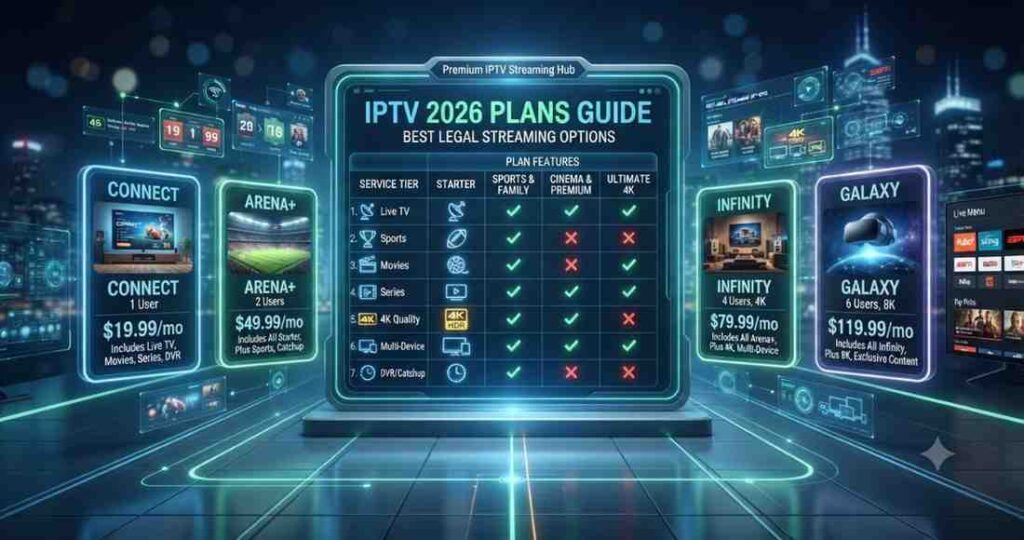
The IPTV and live-streaming market has changed fast, and a few trends make choosing the right plan more important than ever this year.
1. Cable Cutting Has Gone Mainstream
Traditional cable subscriptions have been declining for years, and by 2026 most new households — especially younger professionals, remote workers, and small offices — default to internet-based TV instead of signing a cable contract.
2. Remote Work and Global Teams Need Flexible Access
Freelancers and small businesses increasingly operate across time zones and locations. A good IPTV plan lets you watch a live sports event, a news broadcast, or a product launch stream from a laptop in a co-working space just as easily as from a living room.
3. Price Sensitivity Is High
With inflation affecting subscription budgets everywhere, people want to know exactly what they’re paying for — no hidden fees, no surprise price hikes, no service that vanishes after three months.
4. Content Fragmentation
Content is spread across dozens of apps and services now. IPTV bundles that aggregate live channels in one place solve a real pain point: too many logins, too many apps, too much searching for “where can I watch this.”
5. Legal and Security Awareness Is Rising
More consumers are aware of the risks tied to unlicensed streaming apps — data theft, malware, and legal exposure. Search demand for legitimate IPTV plans, verified pricing, and transparent providers has grown accordingly.
6. Multi-Device Households Are the Norm
The average household or small office in 2026 has several screens in regular use — a smart TV, a couple of phones, a tablet, and a laptop. IPTV plans that support multiple simultaneous streams have become a baseline expectation rather than a premium feature, and providers that skimp on this tend to lose customers quickly.
7. Sports Rights Are Increasingly Fragmented
Live sports coverage is now split across more platforms than ever, with different leagues and events locked to different licensed services. This makes comparison shopping — checking exactly which sports package each provider carries — more important than it used to be when one cable subscription covered almost everything.
Key Benefits of a Good IPTV Plan
- Lower cost than traditional cable in most regions
- No long-term contracts with most providers — cancel anytime
- Watch on multiple devices — TV, phone, tablet, laptop
- Cloud DVR so you never miss a show or event
- Access from anywhere with an internet connection
- Bundled live TV + on-demand content in one subscription
- Regular feature updates since everything is software-based
- Family or team-friendly with multiple simultaneous streams
Top Providers / Tools / Services (Legal & Licensed)
Here are established, licensed IPTV-style and live-TV streaming services widely available in 2026. Availability and channel lineups vary by country — always confirm coverage in your region before subscribing.
1. YouTube TV
A major live-TV streaming service with a large channel bundle, unlimited cloud DVR, and support for multiple simultaneous streams within a household.
2. Hulu + Live TV
Combines Hulu’s on-demand library with live channels, making it a strong option for people who also want a large streaming catalog alongside live TV.
3. fuboTV
Originally built around sports, now offering broad entertainment and news channel bundles alongside strong sports coverage.
4. Sling TV
A budget-friendly, flexible option that lets you pick smaller channel packages instead of one large bundle — good for cost-conscious users.
5. DirecTV Stream
A cable-replacement service from a major telecom provider, offering large channel packages with optional regional sports add-ons.
6. Telecom-Operator IPTV (Region-Specific)
Many national telecom companies (for example, AT&T, Vodafone, Airtel Xstream, BT TV, and others depending on your country) offer their own licensed IPTV services bundled with home broadband — often the most reliable option because it’s backed by your internet provider directly.
Comparison Table
| Provider | Starting Price (USD/mo) | Live Channels | Simultaneous Streams | Cloud DVR | Free Trial |
|---|---|---|---|---|---|
| YouTube TV | ~$72.99 | 100+ | 3 | Unlimited | Limited/Varies |
| Hulu + Live TV | ~$82.99 | 95+ | 2 | 50 hours | Varies |
| fuboTV | ~$79.99 | 180+ | 2–3 | 250 hours | Varies |
| Sling TV | ~$45.99 | 30–50+ | 1–3 | 50 hours | Varies |
| DirecTV Stream | ~$79.99 | 90+ | 20 | Unlimited | Varies |
| Telecom IPTV (region-specific) | Varies by country | Varies | Varies | Varies | Often bundled with broadband |
Pricing and channel counts change frequently and vary by country — always check the provider’s official site for current, region-specific numbers before subscribing.
Features to Look For in an IPTV Plan
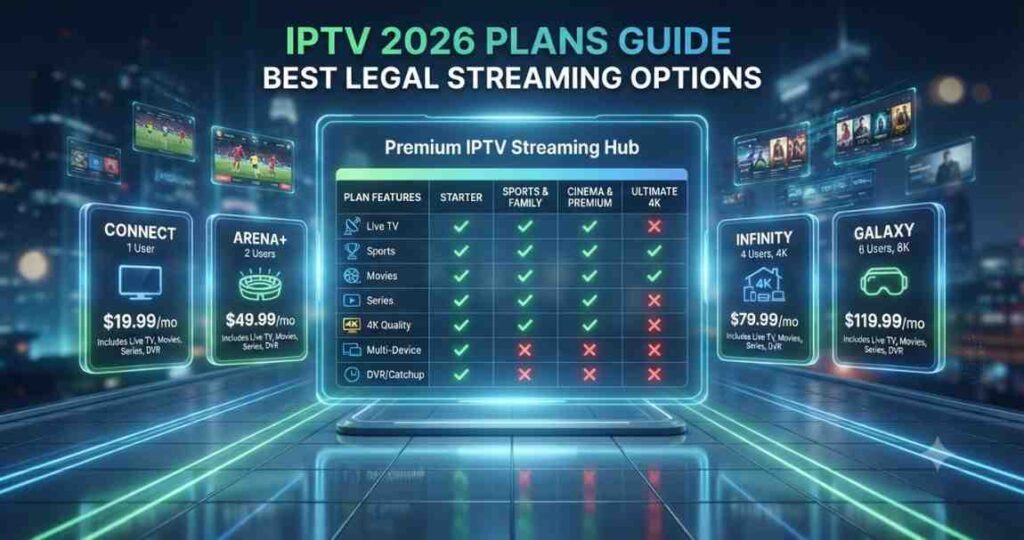
1. Channel Lineup Relevance
Don’t just count channels — check whether the ones you actually watch (news, local sports, business channels) are included.
2. Device Compatibility
Make sure the service supports the devices you already own: Smart TV apps, Roku, Fire TV, Apple TV, Android, iOS, and web browsers.
3. DVR Storage and Retention
Cloud DVR hours and how long recordings are kept before expiring matter a lot for anyone with a busy schedule.
4. Multi-User / Multi-Stream Support
For small teams or families, check how many devices can stream simultaneously under one plan.
5. Add-On Flexibility
Many providers let you add premium channels, sports packages, or extra DVR storage — useful if your needs grow later.
6. Regional Availability
IPTV coverage varies heavily by country. Confirm the service actually operates and holds broadcast rights in your region.
Pricing Table (Typical Monthly Ranges)
| Plan Tier | Price Range (USD/mo) | Best For |
|---|---|---|
| Budget/Slim Bundle | $20 – $46 | Solo users, light viewers, tight budgets |
| Mid-Tier Bundle | $47 – $75 | Families, general entertainment + news |
| Premium/Full Bundle | $76 – $95+ | Sports fans, large households, power users |
| Telecom Bundle (with broadband) | Varies widely | Small businesses wanting one combined bill |
Use Cases
For Learners
Access educational channels, documentaries, and news networks to stay informed while studying — often cheaper than multiple separate subscriptions.
For Freelancers
Freelancers working from home or co-working spaces can use IPTV plans for background news, industry-specific content, or simply unwinding between client projects, all streamed on a laptop or tablet without a cable box.
For Startups and Small Businesses
Reception areas, waiting rooms, break rooms, and client-facing spaces can use a single IPTV subscription to display live news or entertainment without the cost of a full commercial cable contract.
For Sports Fans
Plans with strong regional sports coverage let small business owners host viewing setups (like cafés or shared offices) without needing satellite installation.
For Multi-Location Teams
Cloud-based access means a small business with more than one office location can use the same account logic (subject to provider terms) rather than installing separate hardware everywhere.
For Remote Learning and Research
Learners researching current events, business news, or documentary content can use an IPTV plan’s on-demand and live news channels as a lightweight research tool, rather than juggling multiple separate subscriptions or relying on unreliable free sources.
For Client Presentations and Demos
Small business owners who host client meetings or demos in a physical space can use an IPTV connection to quickly pull up a live news segment, a relevant industry broadcast, or background content in the waiting area — all without extra hardware beyond a smart TV or streaming device already in the room.
How to Choose the Right IPTV Plan (Quick Decision Guide)
Before signing up, run through this short checklist:
- List your must-have channels. Write down the 5–10 channels you actually watch regularly, then check which providers include all of them.
- Count your devices. Add up how many screens in your household or office might stream at the same time, and match that to each plan’s simultaneous-stream limit.
- Set a real budget ceiling. Decide your maximum comfortable monthly spend including likely add-ons, not just the advertised base price.
- Check regional availability. Confirm the provider actually operates, and holds broadcasting rights, in your country before subscribing.
- Test with a trial period. Where available, use a free trial or short-term plan to check streaming quality on your actual internet connection before committing long term.
Best For
- Best overall value: Sling TV (flexible, lower entry price)
- Best for large households: DirecTV Stream (up to 20 streams)
- Best for sports coverage: fuboTV
- Best for combined streaming + live TV: Hulu + Live TV
- Best for reliability and simplicity: YouTube TV
- Best for bundling with home internet: Telecom-operator IPTV plans
Pros and Cons
Pros
- Significantly cheaper than most traditional cable packages
- No equipment installation or long-term contracts in most cases
- Stream from anywhere with an internet connection
- Easy to cancel, upgrade, or downgrade month to month
- Regular software updates and new features
- Cloud DVR removes the need for physical hardware
Cons
- Prices have been rising steadily across the industry
- Channel lineups can change without much notice
- Requires a strong, stable internet connection
- Regional availability is inconsistent — not every plan works everywhere
- Add-ons can quickly increase the “final” monthly bill beyond the advertised price
Best Alternatives
If a full IPTV bundle doesn’t fit your needs, consider these alternatives:
- Standalone streaming apps (Netflix, Disney+, Prime Video) for on-demand-only viewing without live TV
- Free ad-supported streaming (FAST) channels like Pluto TV or Tubi for basic live content at no cost
- Traditional cable or satellite TV if regional IPTV coverage is poor in your area
- Over-the-air antenna + a streaming app combo for cost-conscious users who mainly want local channels plus a few apps
Future Trends in IPTV Plans
🚀 Explore Best IPTV Plans 2026
👉 Check IPTV Plans 2026 🚀
1. AI-Powered Personalization
Expect smarter recommendation engines that learn viewing habits and automatically surface relevant live events, not just on-demand titles.
2. Tighter Bundling With Broadband
More telecom providers are packaging IPTV directly with home and business internet plans, simplifying billing for small businesses.
3. Interactive and Shoppable TV
Live shopping integrations and interactive overlays are becoming more common within IPTV apps, especially for sports and entertainment content.
4. Stricter Anti-Piracy Enforcement
Regulators and rights holders are increasing enforcement against unlicensed IPTV resellers, making it even more important to choose verified, licensed providers going forward.
5. Flexible Micro-Bundles
Expect more “build your own bundle” options, letting users pay only for the specific channel categories they actually watch.
6. Cross-Border Licensing Agreements
As IPTV demand grows globally, expect more providers to expand licensing agreements across borders, gradually reducing the regional gaps that currently limit which legal plans are available in which countries.
7. Better Bandwidth Efficiency
Advances in video compression and adaptive streaming technology should continue to reduce the internet speed required for high-quality live streams, making IPTV more accessible in areas with slower or less stable connections.
Conclusion
Choosing the right IPTV plan in 2026 comes down to three things: knowing what you actually need (channels, devices, DVR), picking a licensed provider so you avoid legal and security headaches, and matching the price tier to your real usage rather than the biggest advertised channel count.
For most learners and freelancers, a mid-tier bundle like Sling TV or Hulu + Live TV offers the best balance of price and content. Small businesses and startups with client-facing spaces may prefer the reliability of a telecom-bundled IPTV plan, while sports-focused users will get the most value from fuboTV or DirecTV Stream’s larger packages.
Whatever you choose, stick to verified, licensed services — the small premium you pay over a “too good to be true” unlicensed IPTV deal buys you stability, support, and peace of mind.
FAQ’s
What does IPTV stand for?
IPTV stands for Internet Protocol Television — TV content delivered over the internet instead of cable or satellite signals.
Are IPTV plans legal?
Licensed IPTV services from established providers (YouTube TV, Hulu + Live TV, telecom operators, etc.) are fully legal. Unlicensed “reseller” IPTV services that redistribute copyrighted broadcasts without authorization are not, and carry legal and security risks for users.
How much does a typical IPTV plan cost?
Legitimate IPTV and live-TV streaming plans generally range from about $20 to $95+ per month depending on channel count, DVR storage, and number of simultaneous streams.
Do I need special equipment for IPTV?
Usually not. Most services work through apps on smart TVs, streaming sticks, phones, tablets, and web browsers — no separate box required in most cases.
How much internet speed do I need for IPTV?
A stable connection of at least 10–25 Mbps is generally recommended for smooth HD streaming; faster speeds are better for 4K content or multiple simultaneous streams.