
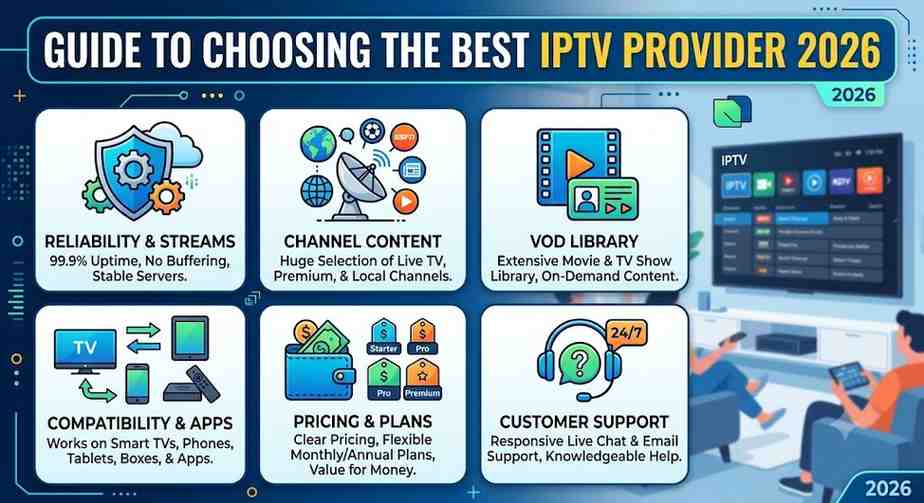
Discover the best IPTV services with this complete guide. Learn features, pricing, compatibility, setup, safety tips, and how to choose the right IPTV provider.
Introduction
Television consumption has changed dramatically as high-speed internet has become more accessible worldwide. Instead of relying on traditional cable or satellite infrastructure, millions of viewers now stream television content directly over the internet using IPTV services.
IPTV, or Internet Protocol Television, delivers television programming through an internet connection rather than conventional broadcasting methods. This modern approach gives users greater flexibility, allowing them to watch their favorite channels, movies, TV shows, and live sporting events on multiple devices from virtually anywhere with a stable internet connection.
The popularity of IPTV services continues to grow in countries such as the United States, United Kingdom, Canada, Australia, and throughout Europe because consumers want more content, better flexibility, and improved value for money.
However, not all IPTV providers offer the same experience. Streaming quality, channel selection, customer support, device compatibility, reliability, pricing, and legal licensing can vary significantly between providers. Choosing wisely can make the difference between a smooth viewing experience and constant buffering or service interruptions.
This guide is designed to help beginners and experienced users understand every aspect of IPTV services before making a decision.
What Are IPTV Services?
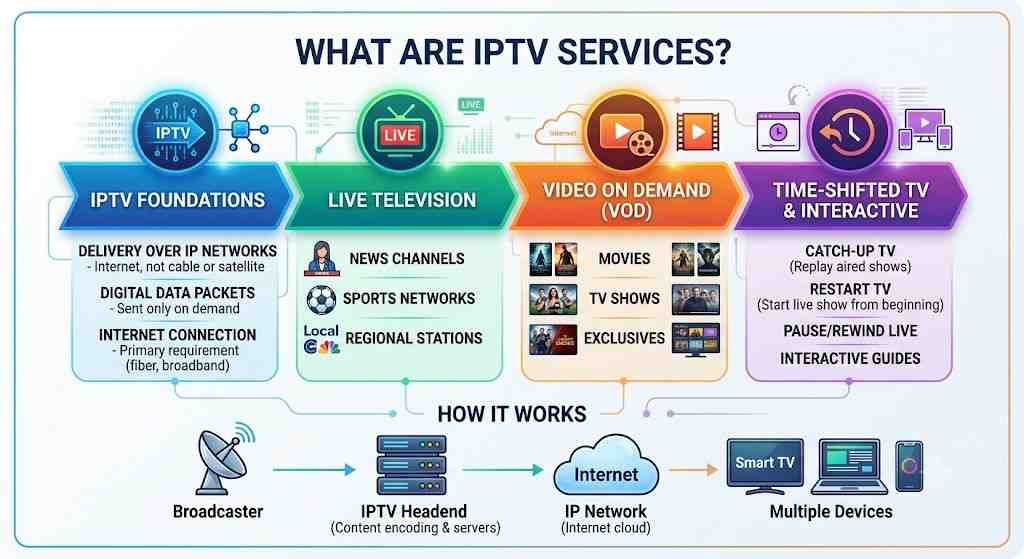
IPTV services refer to television services delivered over Internet Protocol (IP) networks instead of traditional cable, satellite, or terrestrial broadcasting systems.
Rather than receiving television signals through coaxial cables or satellite dishes, viewers stream content using an internet connection. The content travels as digital data packets, allowing users to access television programs on demand or watch live broadcasts through compatible applications and devices.
Unlike conventional television systems that broadcast every channel simultaneously, IPTV sends only the content requested by the viewer. This efficient delivery method reduces bandwidth usage and allows for personalized viewing experiences.
At its core, IPTV combines internet technology with television broadcasting to provide a modern, flexible entertainment platform.
Simple Example
Imagine watching a movie on a streaming platform whenever you want instead of waiting for it to air on television.
IPTV applies the same concept to live television and much more.
For example, a viewer can:
- Watch live football matches
- Stream international news channels
- Access thousands of movies
- Pause live television
- Resume programs later
- Watch on multiple devices
Everything is delivered through the internet.
Main Types of IPTV Services
Although IPTV is often discussed as a single technology, there are several different service models.
Live Television
This is the closest replacement for traditional cable TV.
Users can watch channels in real time, including:
- News
- Sports
- Entertainment
- Kids’ programming
- Documentaries
- Lifestyle channels
Live IPTV is especially popular among sports enthusiasts who want access to international competitions and live events.
Video on Demand (VOD)
Video on Demand allows users to watch movies and TV shows whenever they choose.
Instead of following a broadcast schedule, viewers simply select the content they want and start streaming instantly.
Popular content categories often include:
- Movies
- TV series
- Documentaries
- Children’s content
- Educational videos
- Classic films
Time-Shifted Television
Time-shifted IPTV enables viewers to watch previously aired programs without recording them manually.
Features often include:
- Catch-up TV
- Replay
- Restart TV
- Missed episode viewing
This flexibility makes IPTV particularly attractive for people with busy schedules.
Interactive IPTV
Some IPTV platforms include interactive features such as:
- Electronic Program Guides (EPG)
- Personalized recommendations
- Multi-screen viewing
- Favorite channel lists
- Search functions
- Cloud recording
- Pause and rewind live television
These enhancements improve the overall user experience and make navigation much easier.

Why IPTV Services Are Becoming So Popular
The IPTV industry has experienced remarkable growth due to changing viewing habits, improvements in internet infrastructure, and increasing demand for flexible entertainment.
Several key factors are driving this trend.
1. Flexible Viewing
Modern consumers want to watch content on their own schedule rather than following traditional TV programming.
IPTV provides that freedom.
Users can stream content anytime, anywhere.
2. Multi-Device Access
Unlike conventional television services limited to one location, IPTV supports multiple devices.
Common supported devices include:
- Smart TVs
- Android TV
- Google TV
- Amazon Fire TV Stick
- Apple TV
- Android phones
- iPhones
- Tablets
- Windows PCs
- Mac computers
This flexibility makes IPTV convenient for families and travelers alike.
3. Larger Content Libraries
Many IPTV services provide access to:
- Thousands of live channels
- Movies
- TV shows
- International programming
- Sports
- Kids’ content
- Music channels
- News networks
A broader content selection attracts users seeking more entertainment options than traditional cable packages.
4. Better Value
Many users choose IPTV because it often offers more viewing options at a lower monthly cost than traditional cable or satellite subscriptions.
The exact value depends on the provider, available content, supported features, and licensing.
5. Improved Internet Speeds
Fiber broadband and 5G networks have made high-definition and ultra-high-definition streaming much more practical.
Stable internet connections help deliver smoother playback with fewer interruptions.
6. On-Demand Entertainment
Today’s audiences expect instant access to content.
Instead of waiting for scheduled broadcasts, IPTV users can often enjoy movies and TV series whenever they choose.
7. Worldwide Accessibility
Travelers and expatriates frequently use IPTV platforms to stay connected with television programming from their home countries, provided the service is available and properly licensed in their region.
This global accessibility is one of IPTV’s strongest advantages.
IPTV Market Trends
Several industry trends continue to shape the future of IPTV services:
- Growing adoption of fiber internet
- Expansion of smart home entertainment
- Increased demand for 4K and HDR streaming
- AI-powered content recommendations
- Cloud-based television platforms
- Personalized viewing experiences
- Cross-device synchronization
- Voice-controlled navigation
- Improved streaming compression technologies
As internet infrastructure improves worldwide, IPTV is expected to remain an important part of the digital entertainment landscape.
How Do IPTV Services Work?
Understanding how IPTV works helps explain why it differs from traditional television.
Instead of broadcasting every channel continuously, IPTV delivers only the content requested by the user over an IP network.
Step 1: Content Acquisition
Television channels, movies, and other media are obtained from broadcasters or licensed content sources.
The content is prepared for digital delivery.
Step 2: Encoding
Video files are compressed into streaming-friendly digital formats.
Compression reduces bandwidth while maintaining image quality.
Step 3: Content Storage
Depending on the type of programming, content is either:
- Stored on secure servers (Video on Demand)
- Broadcast live through streaming servers (Live TV)
- Temporarily stored for Catch-up TV features
Step 4: Internet Delivery
When a viewer selects a channel or movie, the IPTV platform sends the requested stream over the internet instead of broadcasting every channel simultaneously.
Step 5: Playback
The IPTV application or compatible media player receives the stream and displays it on the user’s device.
If the internet connection is stable, playback begins within seconds with minimal buffering.
Key Features of IPTV Services
The quality of an IPTV service depends largely on the features it offers. While providers vary in their channel lineup and pricing, the best IPTV services focus on delivering a smooth, reliable, and user-friendly streaming experience.
Below are the most important features to look for before choosing a subscription.
Extensive Live TV Channel Selection
A high-quality IPTV service should provide access to a wide variety of live television channels covering different categories and regions.
Popular channel categories include:
- News
- Sports
- Entertainment
- Movies
- Kids
- Music
- Lifestyle
- Documentary
- Business
- Religious
- International Channels
Many services also include regional content, making it easier for viewers to access channels from their home country while living abroad.
Video on Demand (VOD)
Besides live television, many IPTV services include an extensive Video on Demand library.
Depending on the provider, users may access:
- Latest movies
- Popular TV series
- Classic films
- Children’s entertainment
- Educational content
- Documentaries
A well-organized VOD library improves the overall viewing experience by giving users the freedom to watch content whenever they choose.
High-Quality Streaming
Streaming quality directly affects user satisfaction.
Leading IPTV providers often support multiple resolutions such as:
- SD (480p)
- HD (720p)
- Full HD (1080p)
- Ultra HD (4K)
- 8K (limited content availability)
The actual quality depends on the user’s internet speed, device capabilities, and the provider’s streaming infrastructure.
Electronic Program Guide (EPG)
An Electronic Program Guide functions like a digital TV schedule.
It allows users to:
- View upcoming programs
- Browse channels easily
- Check program timings
- Plan future viewing
- Search for specific shows
A complete EPG significantly improves navigation.
Catch-Up TV
Catch-Up TV enables users to watch programs that aired earlier without needing to record them manually.
This feature is ideal for viewers who miss live broadcasts because of work or other commitments.
Multi-Device Support
Modern IPTV services support streaming on multiple devices, allowing users to switch seamlessly between screens.
Common supported devices include:
- Smart TVs
- Android TV
- Google TV
- Amazon Fire TV Stick
- Apple TV
- Android smartphones
- iPhones
- Tablets
- Windows PCs
- Mac computers
- Linux systems
Some providers also allow simultaneous streaming on multiple devices, depending on the subscription plan.
Cloud DVR
Certain IPTV platforms offer Cloud DVR functionality, enabling users to:
- Record live television
- Save favorite programs
- Replay recorded content
- Schedule future recordings
Cloud recording eliminates the need for physical storage devices.
Favorites & Personalization
Many IPTV applications allow users to customize their experience by:
- Creating favorite channel lists
- Hiding unwanted channels
- Organizing categories
- Setting parental controls
- Receiving personalized recommendations
These features make navigation quicker and more convenient.
Multi-Language Support
International users benefit from interfaces and subtitles available in multiple languages.
This improves accessibility and creates a more inclusive viewing experience.
Fast Channel Switching
One of the signs of a high-performance IPTV service is minimal delay when changing channels.
Quick channel loading enhances the overall user experience, especially during live sports and news broadcasts.
Feature Comparison Table
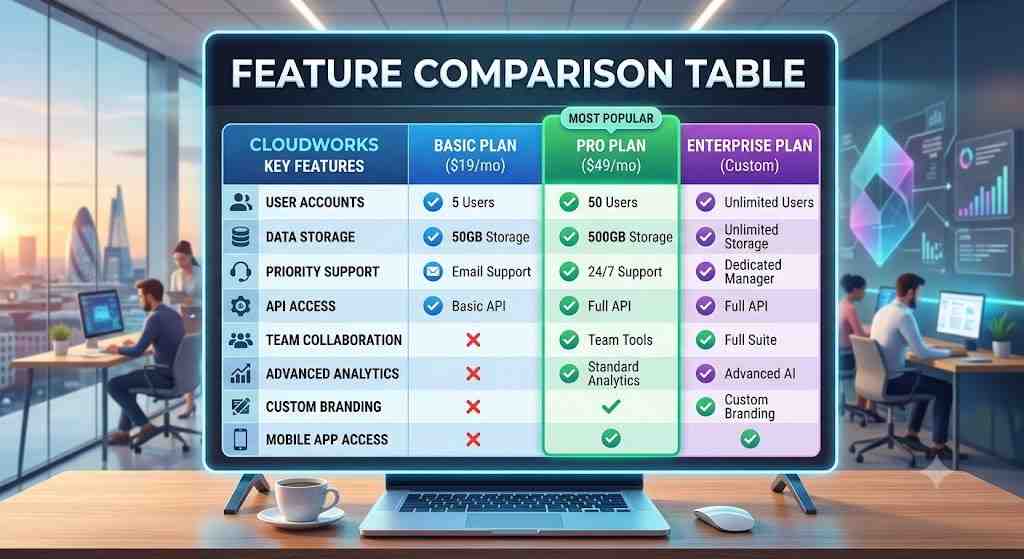
| Feature | Basic IPTV | Premium IPTV |
|---|---|---|
| Live TV Channels | ✔ | ✔ |
| HD Streaming | ✔ | ✔ |
| 4K Support | Limited | ✔ |
| Video on Demand | Limited | Extensive |
| Catch-Up TV | Sometimes | ✔ |
| Electronic Program Guide | Basic | Advanced |
| Multi-Device Support | Limited | ✔ |
| Cloud DVR | Rare | Available |
| Customer Support | Basic | Priority |
| Simultaneous Connections | 1 Device | Multiple Devices |
Benefits of IPTV Services
IPTV has become increasingly popular because it offers flexibility and convenience that traditional television services often cannot match.
Here are the major advantages.
1. Watch Anywhere
As long as you have a stable internet connection, IPTV lets you enjoy your favorite content almost anywhere.
Whether you’re at home, traveling, or staying in a hotel, your entertainment remains accessible.
2. Cost-Effective Entertainment
Many IPTV services offer a broad range of channels and on-demand content under a single subscription.
For households looking to simplify their entertainment options, this can be an attractive alternative to maintaining multiple separate subscriptions.
3. Flexible Viewing Schedule
Unlike traditional broadcasting, IPTV gives users greater control over when they watch content.
Features such as:
- Pause
- Replay
- Catch-Up TV
- Video on Demand
make viewing more convenient.
4. Large Content Library
Many IPTV platforms combine live television with thousands of movies and TV series, providing a comprehensive entertainment experience.
5. Better Device Flexibility
One subscription can often be used across several compatible devices, allowing family members to watch content in different rooms or while traveling, depending on the provider’s policy.
6. International Content
IPTV makes it easier for users to access programming from different countries, including news, sports, and entertainment channels.
This is especially valuable for expatriates and multilingual households.
7. Easy Installation
Most IPTV services do not require satellite dishes or complex wiring.
Users generally need:
- Internet connection
- Compatible device
- IPTV application
- Subscription credentials (if applicable)
Setup can often be completed within minutes.
8. Regular Content Updates
Many IPTV providers update their channel lists and on-demand libraries regularly, helping users discover fresh entertainment.
Why Choosing the Right IPTV Service Matters
Not all IPTV providers deliver the same quality.
Selecting the right service affects:
- Picture quality
- Buffering frequency
- Customer support
- Device compatibility
- Long-term reliability
- User satisfaction
A carefully chosen provider offers a smoother viewing experience and fewer technical issues.
Factors That Matter
Streaming Stability
Reliable servers reduce interruptions and maintain consistent playback during peak viewing hours.
Video Quality
Look for providers that support HD or 4K streaming where available.
Customer Support
Responsive support can help resolve activation, setup, and playback issues more quickly.
Device Compatibility
Ensure the service works with the devices you already own.
User Experience
Features such as an intuitive interface, search tools, and an Electronic Program Guide make daily use more enjoyable.
Security and Privacy
Choose providers that value account security and encourage safe streaming practices.
How to Choose the Best IPTV Service
Finding the right IPTV provider requires more than comparing prices.
Use the following checklist before subscribing.
IPTV Buying Guide
✔ Check Channel Selection
Confirm that the service includes the categories and regions you actually watch.
✔ Verify Device Compatibility
Make sure the provider supports your:
- Smart TV
- Fire TV Stick
- Android TV
- Apple TV
- Smartphone
- Tablet
- PC
✔ Compare Streaming Quality
Choose a provider that offers HD or higher resolutions if your internet speed supports it.
✔ Evaluate Customer Support
Reliable customer service is important if you encounter setup or playback issues.
✔ Understand Subscription Plans
Compare plan lengths, connection limits, and included features before committing.
✔ Read User Reviews
Independent customer reviews can provide useful insights into reliability and overall user experience.
Expert Checklist
Before purchasing an IPTV service, ask yourself:
- Does it support all my devices?
- Is customer support available?
- Does it offer HD or 4K streaming?
- Is the interface easy to use?
- Does it include an EPG?
- Are updates provided regularly?
- Is pricing transparent?
- Does it fit my viewing habits?
Common Mistakes to Avoid
Many first-time users make avoidable mistakes when choosing an IPTV provider.
Avoid these common issues:
- Choosing based only on the lowest price
- Ignoring device compatibility
- Overlooking customer support quality
- Not checking internet speed requirements
- Failing to compare subscription plans
- Skipping user reviews
- Assuming all providers offer the same features
Best Features to Look For
When comparing IPTV services, prioritize providers that offer:
- Stable servers
- HD and 4K streaming support
- Electronic Program Guide (EPG)
- Catch-Up TV
- Video on Demand
- Multi-device compatibility
- Fast channel switching
- Cloud DVR (where available)
- Easy-to-use interface
- Frequent content updates
- Reliable customer support
- Secure account management
Device Compatibility
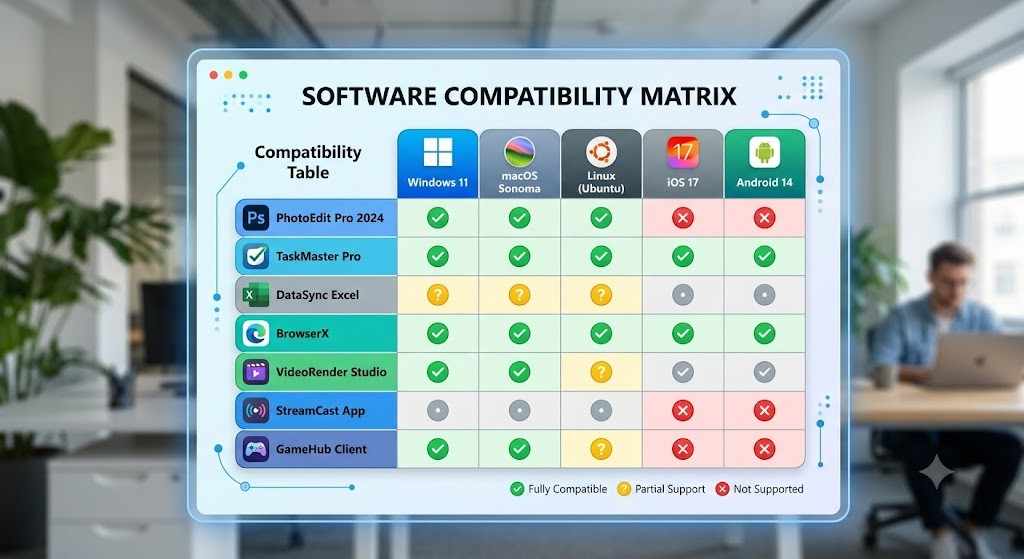
One of IPTV’s biggest strengths is its ability to work across a wide range of devices.
Compatibility Table
| Device | Supported |
|---|---|
| Android TV | ✔ Yes |
| Google TV | ✔ Yes |
| Smart TV | ✔ Yes |
| Amazon Fire TV Stick | ✔ Yes |
| Apple TV | ✔ Yes |
| Android Phone | ✔ Yes |
| iPhone | ✔ Yes |
| iPad | ✔ Yes |
| Windows PC | ✔ Yes |
| Mac | ✔ Yes |
| Linux | ✔ Yes |
| Chromecast | ✔ Yes |
| Tablets | ✔ Yes |
Operating System Support
Most IPTV applications are compatible with:
- Android
- Android TV
- iOS
- iPadOS
- Windows
- macOS
- Linux
- tvOS
- Web browsers (for supported services)
Regional Guide
IPTV adoption continues to expand across the globe, with different viewing preferences depending on the region.
United States (USA)
Viewers in the U.S. often look for:
- Local news
- National sports
- Entertainment networks
- Movie channels
- Spanish-language programming
Fast broadband availability has contributed to widespread IPTV usage.
United Kingdom (UK)
UK users commonly prefer access to:
- Local television channels
- Premier League coverage
- International sports
- Entertainment programming
- On-demand content
Streaming flexibility has made IPTV increasingly attractive to UK households.
Canada
Canadian viewers frequently seek:
- Local channels
- U.S. programming
- French-language content
- International entertainment
- Family-friendly options
Reliable internet infrastructure supports high-quality streaming across much of the country.
Other Important Markets
IPTV services are also popular in:
- Australia
- New Zealand
- Germany
- France
- Italy
- Spain
- Netherlands
- Sweden
- Norway
- India
- United Arab Emirates
- South Africa
- Singapore
- Malaysia
Demand continues to grow as internet connectivity improves worldwide.
IPTV Pricing Guide
Subscription costs vary depending on factors such as channel selection, video quality, simultaneous connections, and included features.
| Plan Type | Typical Duration | Common Features | Estimated Price Range* |
|---|---|---|---|
| Monthly | 1 Month | Live TV, Basic VOD | $10–$20/month |
| Quarterly | 3 Months | More Channels, HD/4K | $25–$50 |
| Semi-Annual | 6 Months | Better Value, Extra Features | $45–$80 |
| Annual | 12 Months | Full Access, Multi-Device Options | $70–$150 |
*Prices are approximate and vary by provider, content licensing, and included features.
Installation & Setup Guide
Setting up IPTV services is generally straightforward, especially when you choose a provider that offers clear instructions and supports your preferred device. The exact process may vary depending on the platform and application, but the overall steps remain similar.
Step 1: Choose a Compatible Device
Before subscribing, ensure your device supports IPTV applications.
Common compatible devices include:
- Smart TVs
- Android TV
- Google TV
- Amazon Fire TV Stick
- Apple TV
- Android smartphones
- iPhones and iPads
- Windows PCs
- macOS computers
- Tablets
Step 2: Ensure a Stable Internet Connection
A reliable internet connection is essential for smooth streaming.
Recommended minimum speeds:
| Streaming Quality | Recommended Speed |
|---|---|
| SD (480p) | 5 Mbps |
| HD (720p–1080p) | 10–20 Mbps |
| 4K UHD | 25–50 Mbps |
| Multiple Devices | 50+ Mbps |
A wired Ethernet connection is generally more stable than Wi-Fi, especially for 4K streaming.
Step 3: Install an IPTV Player
Depending on your provider, you may need to install a compatible IPTV player or use the provider’s dedicated application.
After installation:
- Sign in using your subscription details (if required)
- Import the playlist or portal information provided by your service
- Allow the app to load channels and the program guide
Step 4: Organize Your Channels
For a better viewing experience:
- Create a Favorites list
- Hide unwanted categories
- Organize frequently watched channels
- Enable parental controls if available
Step 5: Optimize Playback Settings
Adjust the application settings to match your internet speed and device capabilities.
Useful settings include:
- Video resolution
- Buffer size
- Hardware decoding
- Audio preferences
- Subtitle language
These adjustments can improve playback performance.
Common Problems & Solutions
Even the best IPTV services can occasionally experience technical issues. Fortunately, most are easy to resolve.
Buffering
Possible Causes
- Slow internet connection
- Network congestion
- Weak Wi-Fi signal
- Temporary server overload
Solutions
- Restart your router
- Switch to Ethernet
- Reduce streaming resolution
- Close background downloads
- Restart the IPTV application
Channels Not Loading
Possible Causes
- Expired subscription
- Playlist synchronization issue
- Internet interruption
- Application error
Solutions
- Refresh the playlist
- Restart the app
- Check your internet connection
- Contact your provider if necessary
Audio but No Video
Solutions
- Restart the player
- Change the video decoder
- Update the application
- Try another compatible player
Application Crashes
Solutions
- Install the latest version
- Clear the application’s cache
- Restart your device
- Reinstall the application
Poor Video Quality
Solutions
- Verify internet speed
- Lower video resolution temporarily
- Reduce network congestion
- Use a wired internet connection
Safety & Best Practices
Using IPTV responsibly helps ensure a better and more secure streaming experience.
Choose Reputable Providers
Research providers carefully before subscribing. Look for:
- Transparent pricing
- Responsive customer support
- Positive customer reviews
- Clear service information
Keep Applications Updated
Regular updates improve:
- Security
- Performance
- Compatibility
- Stability
Enable automatic updates whenever possible.
Protect Your Account
Use strong passwords and avoid sharing your account credentials.
If supported, enable two-factor authentication for added security.
Secure Your Home Network
Protect your streaming devices by:
- Updating your router firmware
- Using WPA2 or WPA3 Wi-Fi encryption
- Changing default router passwords
- Keeping operating systems updated
Respect Local Laws and Licensing
IPTV services vary in how they acquire and distribute content. Before subscribing, verify that the service complies with the copyright and broadcasting laws applicable in your country. Using properly licensed services helps support content creators and reduces legal and security risks.

Pros & Cons
| Pros | Cons |
|---|---|
| Flexible viewing | Requires reliable internet |
| Multi-device compatibility | Quality varies between providers |
| Large content selection | Some features differ by provider |
| On-demand entertainment | Internet outages interrupt viewing |
| HD & 4K support | High-quality streaming needs faster internet |
| Convenient access | Device compatibility should be verified |
| User-friendly applications | Learning curve for beginners |
Best Alternatives
Depending on your entertainment needs, there are several alternatives to IPTV services.
| Service Type | Best For | Advantages | Limitations |
|---|---|---|---|
| Traditional Cable TV | Local television | Stable service | Higher monthly cost |
| Satellite TV | Rural locations | Wide coverage | Weather can affect reception |
| Streaming Platforms | Movies & TV shows | Original content | Limited live TV |
| Free-to-Air Television | Local channels | No subscription | Fewer channel options |
| Hybrid Smart TV Services | Casual viewers | Easy setup | Limited channel availability |
Each option has its strengths, so compare features, pricing, and available content before deciding.
Expert Tips
Follow these recommendations to enjoy a better IPTV experience.
1. Test Your Internet Speed
Run a speed test before streaming, especially if you plan to watch HD or 4K content.
2. Prefer Ethernet for Stable Streaming
A wired connection generally provides lower latency and fewer interruptions than Wi-Fi.
3. Keep Your Device Updated
System updates improve compatibility and security.
4. Organize Favorite Channels
Creating personalized channel lists saves time and makes navigation easier.
5. Compare Features—Not Just Price
Consider streaming quality, customer support, supported devices, and included features alongside cost.
6. Monitor Data Usage
If your internet plan has data limits, keep track of your streaming usage, particularly with 4K content.
7. Use Compatible Hardware
Modern streaming devices often provide smoother playback and better application performance.
Final Verdict
IPTV services have transformed the way people watch television by combining the convenience of internet streaming with the familiarity of traditional TV. Whether you’re interested in live sports, international channels, movies, or on-demand entertainment, IPTV offers a flexible viewing experience across a wide range of devices.
However, choosing the right IPTV service requires careful research. Rather than focusing solely on price, consider streaming stability, video quality, supported devices, customer support, available features, and compliance with applicable laws in your region. A reliable, well-supported service can provide a smoother and more enjoyable experience over the long term.
As internet speeds continue to improve and streaming technology advances, IPTV is expected to remain a significant part of home entertainment worldwide. By following the guidance in this article, you’ll be well-equipped to evaluate providers and select an IPTV service that aligns with your needs and viewing preferences.
Frequently Asked Questions
1. What are IPTV services?
IPTV services deliver television content over the internet instead of through traditional cable or satellite systems.
2. Are IPTV services legal?
Legality depends on the provider and your country’s laws. Always choose services that have the necessary rights to distribute their content.
3. Do IPTV services require high-speed internet?
Yes. A stable broadband connection is important for uninterrupted streaming, especially for HD and 4K content.
4. Can I watch IPTV on a Smart TV?
Yes. Most Smart TVs support IPTV applications either directly or through compatible streaming devices.
5. Which devices support IPTV?
Common supported devices include Android TV, Fire TV Stick, Apple TV, Smart TVs, smartphones, tablets, Windows PCs, and Macs.
6. Can I use IPTV while traveling?
Many services support streaming in different regions, although availability may vary based on licensing and provider policies.
7. Does IPTV support live sports?
Many IPTV services include live sports channels, though the exact selection depends on the provider and licensing agreements.
8. Can multiple devices use one IPTV account?
Some providers allow multiple simultaneous connections, while others limit access to a single device.
9. Why does IPTV buffer?
Buffering is usually caused by slow internet speeds, Wi-Fi issues, or network congestion.
10. Does IPTV include movies and TV shows?
Many providers offer Video on Demand libraries in addition to live television channels.
11. How much do IPTV services cost?
Prices vary by provider, features, and subscription length. Monthly plans are generally more expensive per month than annual subscriptions.
12. Can I record live TV?
Some IPTV services include Cloud DVR or recording functionality.
13. Is IPTV better than cable?
It depends on your needs. IPTV offers greater flexibility and device compatibility, while cable can provide consistent local service without relying on internet bandwidth.
14. Do IPTV services support 4K streaming?
Many modern IPTV providers support 4K where compatible content and sufficient internet speed are available.
15. What internet speed is recommended for IPTV?
Around 10–20 Mbps is typically suitable for HD streaming, while 25 Mbps or more is recommended for 4K streaming.
16. Can I pause and rewind live TV?
Some IPTV services offer pause, rewind, and Catch-Up TV features, depending on the provider.
17. Are IPTV apps easy to install?
Most IPTV applications can be installed within a few minutes by following the provider’s setup instructions.
18. What should I look for in an IPTV provider?
Focus on reliability, supported devices, streaming quality, customer support, pricing transparency, and legal content licensing.