
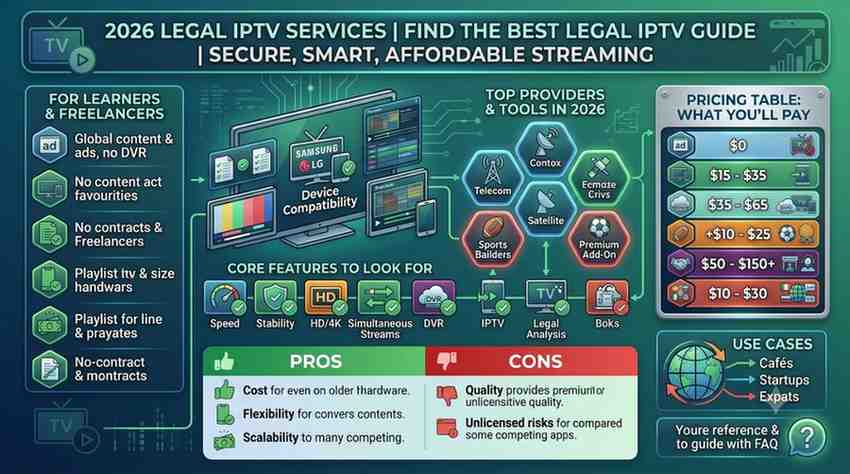
Discover the best legal IPTV services in 2026. Compare pricing, features & providers to stream live TV safely, smartly, and affordably.
Table of Contents
- Introduction
- What Is an IPTV Service?
- Why IPTV Matters in 2026
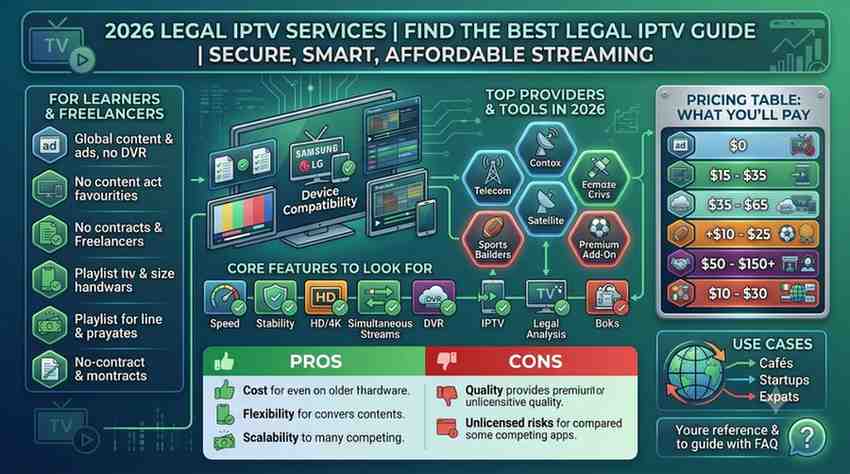
- Key Benefits of Using an IPTV Service
- Top IPTV Providers & Tools in 2026
- Comparison Table: Leading IPTV Services
- Core Features to Look For
- Pricing Table: What You’ll Actually Pay
- Use Cases: Who Actually Needs IPTV
- Best For: Matching IPTV to Your Situation
- Pros and Cons of IPTV Services
- Best Alternatives to Traditional IPTV
- Future Trends: Where IPTV Is Heading
- Conclusion
- Frequently Asked Questions (FAQs)
Introduction
Streaming has quietly rewired how the entire world watches television — and at the center of that shift sits one technology most people use daily without ever naming it: IPTV, or Internet Protocol Television.
If you’ve searched for “iptv service,” chances are you’re trying to answer one of a few very practical questions: Is IPTV legal? What’s the difference between IPTV and regular streaming? Which provider is actually worth paying for? And how do I avoid getting scammed by a shady reseller?
This guide answers all of that — in plain language, with real comparisons, and without the recycled fluff that dominates most “IPTV” articles online. Whether you’re a freelancer working from a rented apartment with no cable hookup, a startup setting up a lounge or waiting-room TV, a small business owner running a café or gym with live sports on the walls, or simply a learner trying to understand how modern television actually works — this article is built for you.
We’ll break down what IPTV really means, why it’s become unavoidable in 2026, which services are worth your money, what red flags to avoid, and where the entire industry is headed next.
What Is an IPTV Service?
IPTV (Internet Protocol Television) is a method of delivering television content over the internet instead of through traditional satellite dishes, cable boxes, or over-the-air antennas. Instead of receiving a broadcast signal, your device requests a data stream from a server, much like loading a webpage — except that “webpage” is a live TV channel or on-demand video library.
How IPTV Technically Works
- Content Source – A broadcaster or content owner encodes video into a digital format.
- Streaming Server – The video is compressed and distributed via internet protocols (usually HLS or MPEG-DASH).
- Middleware – Software manages subscriber authentication, channel guides, and billing.
- Client App/Device – You access the stream through an app, smart TV, streaming box, or browser.
IPTV vs. Traditional TV vs. OTT Streaming
| Format | Delivery Method | Example |
|---|---|---|
| Traditional Cable/Satellite | Coaxial cable or satellite dish | Legacy pay-TV bundles |
| IPTV | Internet Protocol (managed or public network) | Telecom-operator TV, live-TV streaming bundles |
| OTT (Over-The-Top) | Public internet, app-based, on-demand | General video-on-demand apps |
In practice, most consumer “IPTV services” today are actually a blend of live linear channels plus on-demand libraries, delivered through an app — which is why the line between “IPTV” and “streaming service” has blurred so much by 2026.
A Quick Word on Legality
Not all IPTV is created equal. Licensed IPTV services — such as telecom-operator TV packages and officially licensed live-TV streaming bundles — pay content owners for distribution rights, exactly like cable providers do. Unlicensed “cheap IPTV” resellers, on the other hand, often redistribute copyrighted channels without permission, which is illegal in most countries and carries real risk (account bans, malware-laden apps, no customer support, and potential legal exposure). This guide focuses on legitimate, licensed options so you can stream with confidence.
Why IPTV Matters in 2026
The television landscape has changed dramatically, and IPTV sits at the center of that transformation for several concrete reasons:
1. Cord-Cutting Has Become the Default, Not the Exception
Traditional cable subscriptions have been declining for over a decade, and by 2026 internet-delivered TV is the primary way most households and businesses consume live content.
2. Remote Work and Global Teams Need Flexible Access
Freelancers and distributed teams often move between countries or work from co-working spaces without fixed cable infrastructure. IPTV’s app-based access model fits that lifestyle perfectly — no technician visits, no long-term contracts, no physical installation.
3. Small Businesses Need Affordable Live Content
Cafés, gyms, barbershops, and waiting rooms want live sports or news on their screens without paying for expensive commercial cable packages. Business-tier IPTV/streaming plans offer a lighter-weight alternative.
4. Bandwidth and Device Ecosystems Finally Caught Up
Faster average internet speeds, cheaper 4K-capable streaming devices, and near-universal smart TV adoption mean IPTV now delivers a broadcast-quality experience without buffering complaints that plagued early versions of the technology.
5. Advertisers and Data Enable Smarter, Cheaper Packages
Ad-supported and hybrid IPTV tiers now let providers offer lower prices, funded partly by targeted advertising — a model that benefits budget-conscious learners and startups.
Key Benefits of Using an IPTV Service
Cost Efficiency
Most IPTV/live-streaming bundles cost significantly less than legacy cable packages, and many let you pick channel groups à la carte instead of paying for hundreds of channels you’ll never watch.
No Installation or Hardware Lock-In
There’s no need for a technician, a satellite dish, or long-term equipment leases. You install an app, log in, and start watching within minutes.
Multi-Device Flexibility
IPTV apps typically work across smart TVs, phones, tablets, laptops, and streaming boxes — ideal for freelancers who move between a home office and co-working spaces.
On-Demand + Live in One Place
Unlike old-school broadcast TV, most IPTV platforms combine live channels with a searchable on-demand catalog, DVR functionality, and personalized recommendations.
Scalable for Business Use
Small businesses can often add multiple screens or locations under a single business account, simplifying billing and management.
Global Content Access
Many IPTV platforms offer regional channel packs, making it easier for expats, students, and remote workers to keep up with news and entertainment from their home country.
Top IPTV Providers & Tools in 2026
Below is a snapshot of well-known, licensed live-TV streaming and IPTV-style platforms commonly used by individuals, freelancers, and small businesses. Availability and channel lineups vary by country, so always confirm licensing coverage for your region before subscribing.
1. Telecom-Operator IPTV Packages
Most national telecom and broadband providers now offer their own IPTV service bundled with home internet — often the most reliable option because it runs on a managed (not public) network, reducing buffering.
2. Live-TV Streaming Bundles
Cloud-based live-TV services that replicate a cable-style channel lineup through an app, typically including cloud DVR storage and multiple simultaneous streams.
3. Ad-Supported Free Streaming Channels
Platforms offering hundreds of free, ad-supported linear channels — a strong option for learners or budget-conscious users who mainly want background news, sports highlights, or niche content.
4. Sports-Focused Streaming Add-Ons
Dedicated sports streaming tiers or add-ons for users who mainly want live leagues and pay-per-view events without a full channel bundle.
5. Business/Commercial Streaming Licenses
Specialized commercial-use streaming licenses designed for bars, gyms, waiting rooms, and retail spaces that legally display live content to the public.
6. Regional/International IPTV Bundles
Providers specializing in region-specific content packs (e.g., South Asian, Middle Eastern, European, or Latin American channel groups) for diaspora audiences.
Comparison Table: Leading IPTV Service Categories
| Category | Best For | Typical Monthly Cost | Contract Required | Device Support |
|---|---|---|---|---|
| Telecom-Operator IPTV | Home users wanting reliability | $$ | Sometimes | Set-top box, smart TV, app |
| Live-TV Streaming Bundle | Cord-cutters wanting cable-like lineup | $$$ | No | Smart TV, mobile, browser, streaming box |
| Ad-Supported Free Channels | Learners, budget users | Free | No | Smart TV, mobile, browser |
| Sports Streaming Add-On | Sports fans, small businesses | $$ (add-on pricing) | No | Smart TV, mobile, streaming box |
| Business/Commercial License | Cafés, gyms, waiting rooms | $$$ (commercial tier) | Often annual | Commercial-grade set-top box |
| Regional/International Bundle | Expats, diaspora audiences | $$ | No | App, smart TV |
($ = budget-friendly, $$ = mid-range, $$$ = premium — exact pricing depends on country and provider.)
Core Features to Look For
When evaluating any IPTV service, run it through this checklist:
Streaming Quality & Stability
- Adaptive bitrate streaming (auto-adjusts to your connection)
- Support for HD/4K where available
- Low buffering rate during peak hours
Content & Channel Lineup
- Number and relevance of live channels
- On-demand library depth
- Regional/local channel availability
Device Compatibility
- Smart TV apps (Samsung, LG, Android TV, Fire TV, Apple TV)
- Mobile apps (iOS/Android)
- Browser-based access for laptops
DVR & Multi-Screen Support
- Cloud DVR storage limits
- Number of simultaneous streams allowed
- Multi-profile support for families or teams
Customer Support Quality
Legitimate providers offer transparent support channels — live chat, email, or phone — and clear refund/cancellation policies. Lack of any real support is a major red flag for unlicensed services.
Security & Account Protection
Two-factor authentication, encrypted streaming, and clear privacy policies are non-negotiable, especially for business accounts handling payment details.
Pricing Table: What You’ll Actually Pay
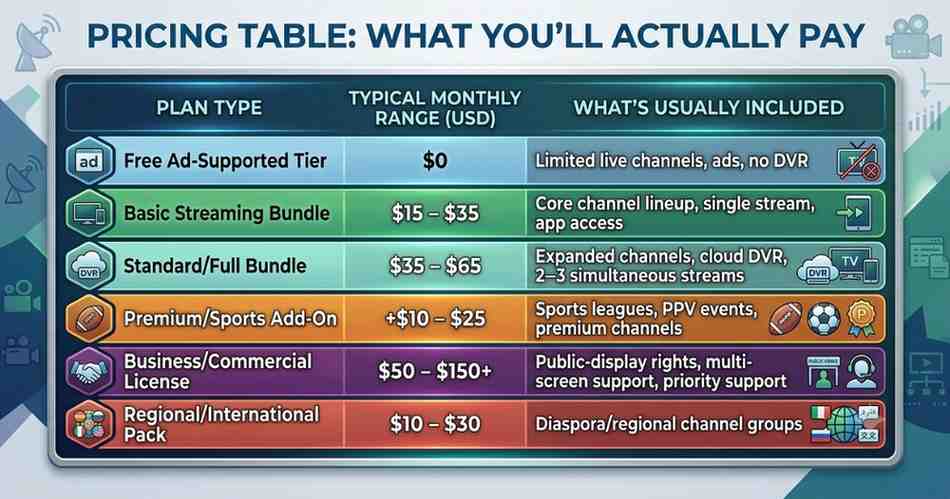
| Plan Type | Typical Monthly Range (USD) | What’s Usually Included |
|---|---|---|
| Free Ad-Supported Tier | $0 | Limited live channels, ads, no DVR |
| Basic Streaming Bundle | $15 – $35 | Core channel lineup, single stream, app access |
| Standard/Full Bundle | $35 – $65 | Expanded channels, cloud DVR, 2–3 simultaneous streams |
| Premium/Sports Add-On | +$10 – $25 | Sports leagues, PPV events, premium channels |
| Business/Commercial License | $50 – $150+ | Public-display rights, multi-screen support, priority support |
| Regional/International Pack | $10 – $30 | Diaspora/regional channel groups |
Pricing varies significantly by country, currency, and current promotions — always verify directly with the provider before subscribing.
Use Cases: Who Actually NeedsIPTV Service
For Learners
Students and self-learners use free or low-cost ad-supported IPTV channels to access news, documentaries, and language-learning content from multiple countries without expensive cable contracts.
For Freelancers
Freelancers who frequently relocate or work from co-working spaces rely on app-based IPTV to keep entertainment and news access consistent, regardless of location — no installation, no long-term lease.
For Startups
Early-stage startups use budget live-TV bundles for office common areas, keeping teams updated on industry news or major events without a full commercial contract.
For Small Business Owners
Cafés, salons, waiting rooms, and gyms use commercial-licensed IPTV or streaming plans to legally display sports, news, or entertainment for customers — improving dwell time and customer experience.
Best For: Matching IPTV to Your Situation
| If you are a… | You’re best suited to… |
|---|---|
| Budget-conscious learner | Free ad-supported IPTV channels |
| Frequently relocating freelancer | App-based live-TV streaming bundle (no contract) |
| Lean startup setting up an office | Basic streaming bundle + sports add-on |
| Café/gym/retail owner | Business/commercial streaming license |
| Expat or diaspora household | Regional/international IPTV bundle |
| Sports-obsessed household | Sports-focused streaming add-on |
Pros and Cons of IPTV Services
Pros
- Lower cost than traditional cable/satellite in most markets
- No hardware installation or long-term equipment contracts
- Works across multiple devices and locations
- Combines live TV with on-demand content
- Easy to scale up or down as needs change
- Often includes cloud DVR and multi-stream support
Cons
- Stream quality depends heavily on your internet connection
- Some regions have limited licensed content availability
- Unlicensed “cheap IPTV” resellers pose legal and security risks
- Channel lineups and pricing change frequently, requiring regular comparison
- Free tiers often come with heavy advertising
- Commercial/business licensing can be significantly more expensive than personal plans
Best Alternatives to Traditional IPTV Service
If a full IPTV bundle doesn’t fit your needs, consider these alternatives:
1. Standalone Streaming Apps
Subscription-based on-demand platforms focused purely on movies/series rather than live channels — ideal if live TV isn’t a priority.
2. Free Ad-Supported Streaming Channels (FAST)
Dedicated free, ad-supported streaming apps offering curated linear channels without any subscription fee.
3. Over-the-Air (OTA) Antenna + Streaming Hybrid
Combining a digital antenna for local broadcast channels with a lightweight streaming subscription for everything else — often the cheapest legal setup for solo users.
4. Sports-Only Streaming Passes
Single-event or single-season passes for specific leagues, avoiding a full bundle entirely.
5. Bundled Telecom Packages
Internet + TV bundles from your existing broadband provider, which can sometimes be cheaper than standalone streaming subscriptions when combined.
Future Trends: Where IPTV Is Heading
AI-Powered Personalization
Expect deeper AI-driven recommendation engines that curate live channel suggestions and highlight reels based on viewing habits, not just on-demand content.
FAST Channel Expansion
Free ad-supported streaming TV (FAST) channels are expanding rapidly, pushed by advertisers seeking cord-cutter audiences — meaning more free, legal live content will become available.
Interactive & Shoppable TV
Live streams increasingly integrate interactive overlays, polls, and shoppable ads, particularly around live sports and events.
Consolidation of Apps
Expect continued consolidation, with aggregator apps bundling multiple streaming and IPTV subscriptions into a single interface and bill — reducing “app fatigue.”
Stronger Anti-Piracy Enforcement
As regulators increase scrutiny of unlicensed IPTV resellers, expect stricter enforcement, more domain seizures, and clearer legal distinctions between licensed and pirate services — reinforcing the importance of choosing verified, licensed providers.
5G and Edge Streaming
Wider 5G rollout and edge-computing infrastructure will further reduce buffering and enable higher-quality mobile IPTV streaming, especially benefiting freelancers who work and stream on the move.
Conclusion
IPTV has moved from a niche technical term to the backbone of how most of the world watches television in 2026. For learners, it offers a low-cost gateway to global content. For freelancers, it delivers the flexibility to stay entertained and informed without being tied to one location. For startups and small business owners, it provides an affordable, scalable way to bring live content into offices, cafés, and waiting rooms.
The key to getting real value from an IPTV service isn’t chasing the cheapest possible price — it’s choosing a licensed, transparent provider with the right mix of channels, device support, and pricing for your specific situation. Use the comparison tables and “best for” breakdowns above as your shortlist filter, verify licensing coverage for your country, and start with a free or entry-level tier before committing to a premium plan.
Streaming has never been more flexible — the smartest move now is making sure it’s also safe, legal, and genuinely worth what you pay for it.
Frequently Asked Questions (FAQ’s)
Is IPTV legal?
IPTV as a technology is completely legal — it’s simply a delivery method. What matters is whether the specific service is licensed to distribute the channels it offers. Telecom-operator IPTV and officially licensed live-TV streaming bundles are legal; unlicensed resellers offering cheap access to premium cable channels typically are not, and using them can carry legal and security risks.
What internet speed do I need for a smooth IPTV experience?
Most standard-definition streams run comfortably on 10–15 Mbps, while HD content typically needs 25 Mbps and 4K content benefits from 50+ Mbps, especially if multiple devices are streaming simultaneously.
Can I use IPTV without a smart TV?
Yes. Most IPTV and live-TV streaming apps work on smartphones, tablets, laptops, and inexpensive streaming boxes or sticks, so a smart TV isn’t required.
How is IPTV different from Netflix-style streaming?
Traditional on-demand platforms focus almost entirely on pre-recorded movies and series. IPTV specifically emphasizes live, linear channels — replicating a cable-style experience — often alongside an on-demand library.
Do I need a commercial license to show IPTV in my business?
In most countries, yes — displaying live TV content publicly (in a café, gym, waiting room, or retail space) typically requires a commercial or public-performance license, which differs from a standard personal subscription.
What’s the cheapest way to legally access live TV?
A combination of a digital antenna for local broadcast channels plus one or two free, ad-supported streaming (FAST) channel apps is usually the lowest-cost fully legal setup.
How can I tell if an IPTV provider is trustworthy?
Look for transparent pricing, clear licensing information, real customer support channels, secure payment processing, and reviews from established tech publications. Be cautious of extremely cheap “all channels” offers, since these are common red flags for unlicensed services.
Can freelancers deduct IPTV subscriptions as a business expense?
In some cases, if the subscription is used specifically for business purposes (such as monitoring industry news or content for client work), it may be partially deductible — but this depends on your country’s tax rules, so it’s best to confirm with a local accountant or tax advisor.
Author: Kevin Webix
SEO Specialist
📧 Email: kevinwebix08@gmail.com